English
- English
- Afrikaans
- беларускі
- Hrvatski
- lugha ya Kiswahili
- ქართული
- Кыргыз тили
- Монгол хэл
- IsiXhosa
- Somali
- O'zbek
- Hawaiian
- Հայերեն
- Español
- Português
- русский
- Français
- 日本語
- Deutsch
- tiếng Việt
- Italiano
- Nederlands
- ภาษาไทย
- Polski
- 한국어
- Svenska
- magyar
- Malay
- বাংলা ভাষার
- Dansk
- Suomi
- हिन्दी
- Pilipino
- Türkçe
- Gaeilge
- العربية
- Indonesia
- تمل
- ελληνικά
- український
- فارسی
- български
- ລາວ
- Latine
- Қазақша
- Azərbaycan
- Македонски
- Lietuvos
- Română
- Srpski језик

Bottled Water Production Line: 10 Factors Before Investment
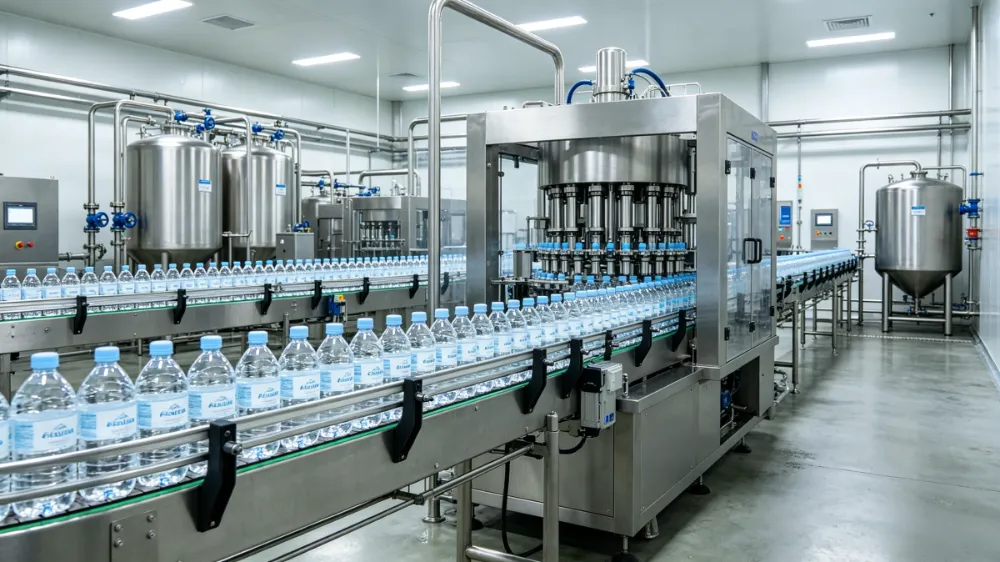
Bottled Water Production Lines is not simply a combination of water treatment, filling, and packaging equipment. The long-term performance of a bottled water plant depends on whether each section is correctly matched with the water source, production target, bottle design, operating environment, and compliance requirements.
Many production problems are not caused by individual machines but by decisions made before installation, such as selecting unsuitable treatment processes, oversizing capacity, or overlooking maintenance requirements.
Before investing in a bottled water facility, the following factors should be evaluated to build a production system with stable quality, manageable operating costs, and future expansion flexibility.
1. Start With Raw Water Analysis, Not Equipment Selection
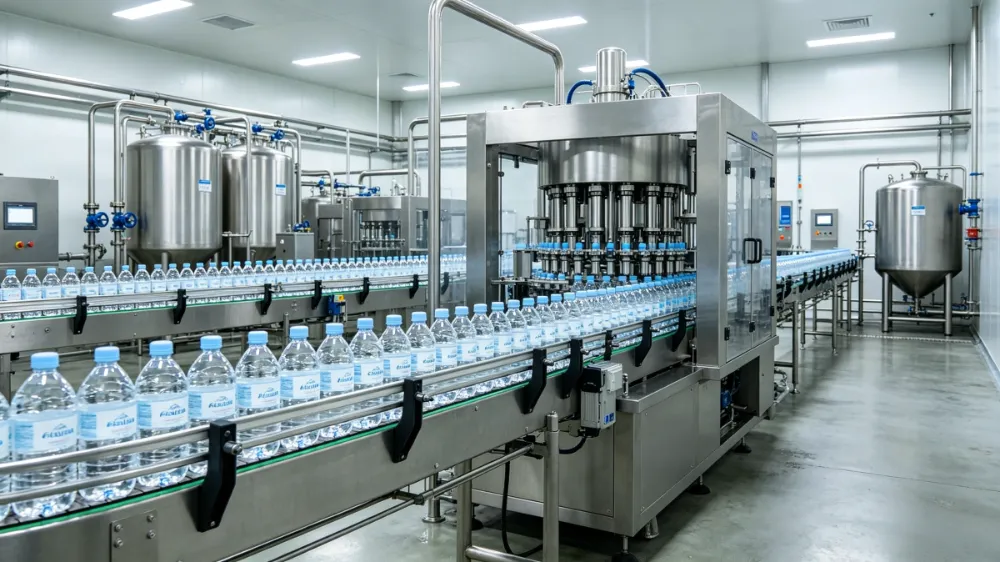
The treatment system is the foundation of a bottled water project. Different water sources require different treatment processes, and a standard configuration cannot replace actual laboratory analysis.
Groundwater may contain higher levels of iron, manganese, hardness, or dissolved minerals, while municipal water often requires additional chlorine removal and organic control.
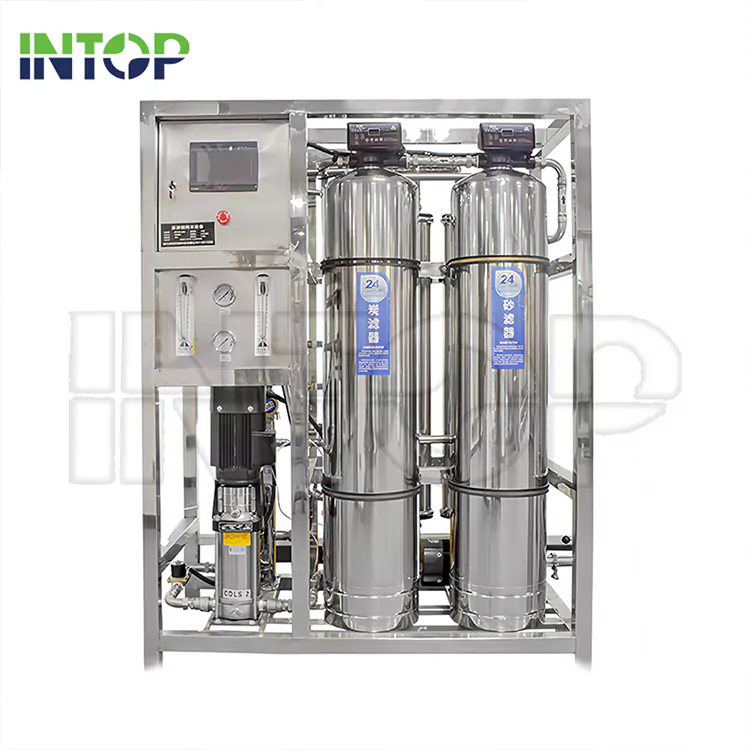
A typical water treatment process may include sand filtration for suspended solids removal, activated carbon filtration for chlorine and organic matter reduction, water softening or antiscalant dosing for hardness control, reverse osmosis (RO) for dissolved solids reduction, and UV sterilization or ozone treatment for final disinfection.
Before selecting treatment equipment, the raw water should be evaluated through parameters such as TDS level, conductivity, hardness, pH value, iron and manganese content, and microbiological indicators.
RO membrane selection, recovery rate, and pretreatment design should then be calculated according to these results. An unsuitable treatment design may increase chemical consumption, shorten membrane service life, and create unstable water quality during operation.
2. Choose Production Capacity Based on Actual Demand
Production capacity should match market demand rather than simply selecting the largest available model.
An oversized Bottled Water Production Line can increase the initial investment while creating unnecessary energy consumption, maintenance requirements, and equipment depreciation. On the other hand, insufficient capacity may limit future growth and require early equipment upgrades.
Typical capacity ranges include:
|
Capacity Range |
Common Application |
|
2,000–6,000 bottles per hour |
Small regional bottled water plants |
|
8,000–18,000 bottles per hour |
Medium commercial production |
|
24,000+ bottles per hour |
Large-scale beverage operations |
Capacity planning should consider expected daily output, working hours, bottle size variation, seasonal demand changes, and possible future expansion.
A flexible production design is often more valuable than selecting the highest output during the initial investment stage.
3. Evaluate Bottle Production Options: Preforms or Blow Molding
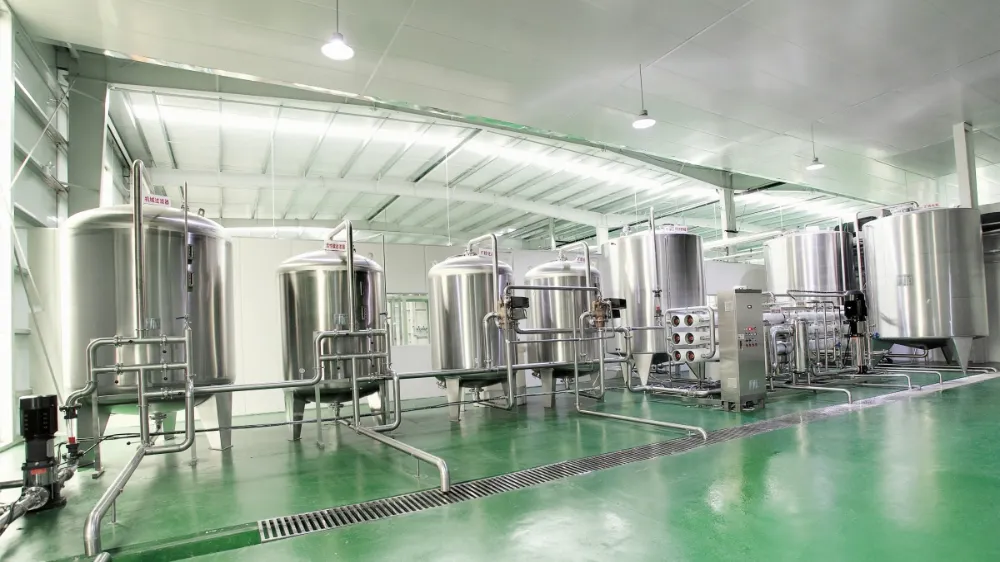
PET bottle supply is another important decision during project planning. Bottles can either be purchased from external suppliers or produced inside the factory using a bottle blowing system.
Purchasing finished bottles usually requires less initial investment and is suitable for projects with limited production volume or restricted factory space. However, transportation costs, storage requirements, and dependence on external suppliers should also be considered.
Producing bottles from PET preforms requires additional investment in blowing machines, molds, compressors, and maintenance systems. This approach can provide better control over bottle supply and reduce packaging logistics pressure when production volume is high and demand is stable.
The choice between external bottle sourcing and in-house blowing should be based on production scale, bottle specifications, operating cost analysis, and long-term expansion plans.
4. Filling Hygiene Depends on Equipment Design
Because bottled water has low acidity and usually contains no preservatives, contamination control during filling is critical.
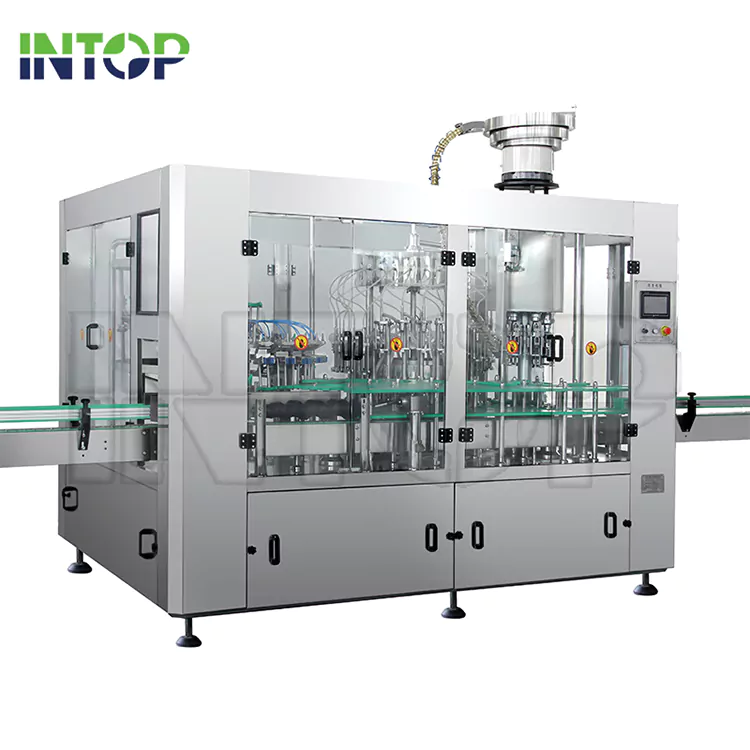
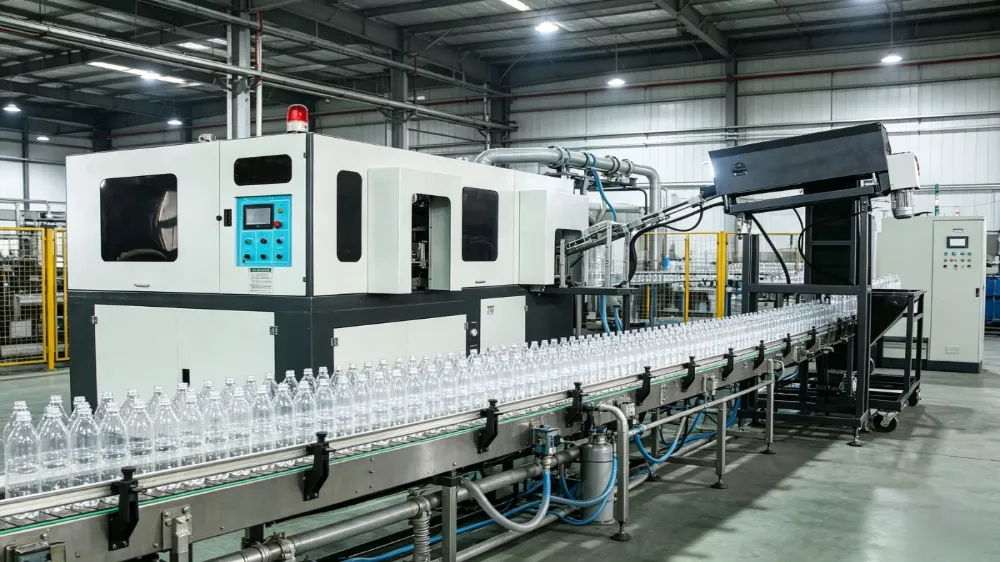
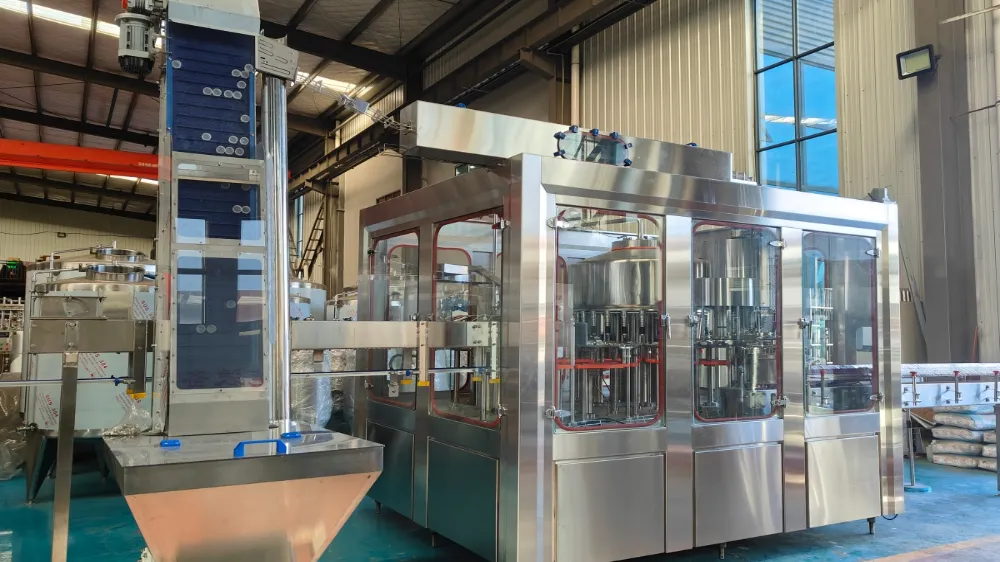
Modern filling systems commonly use a rinse-filling-capping monoblock to reduce bottle transfer points and improve hygiene control. However, the overall filling design should be evaluated beyond machine speed.
Bottle neck handling is important because contact with the internal bottle surface can increase contamination risks before filling. Cap handling systems should also provide controlled storage, feeding, and sterilization procedures to maintain hygiene conditions.
The filling environment is another key consideration. Filtered air systems and controlled production areas help maintain stable conditions during operation.
The filling section should also support CIP (Clean-In-Place) procedures. Efficient cleaning cycles reduce downtime and simplify routine maintenance.
5. Check Material Selection for Water-Contact Components
Material selection directly affects hygiene performance, durability, and maintenance requirements.
For water-contact components, evaluation should focus on stainless steel grade, surface finish, corrosion resistance, welding quality, and cleaning accessibility.
Food-grade stainless steel such as 304 or 316 is commonly considered according to water characteristics and process requirements. A properly selected material structure helps reduce corrosion risks and supports long-term sanitation performance.
Material specifications should be clearly defined before manufacturing to avoid future maintenance issues caused by unsuitable components.
6. Automation Level Determines Labor and Expansion Costs
After filling, packaging processes often determine labor requirements and overall production efficiency.
The downstream section may include labeling, film wrapping, carton packing, and palletizing systems. The suitable automation level depends on production speed, labor availability, and future growth expectations.
For smaller production volumes, semi-automatic packaging may provide sufficient efficiency while keeping investment lower. For higher-speed lines, excessive manual handling can create labor dependency, production delays, and inconsistent packaging quality.
A staged automation approach allows plants to improve efficiency gradually as production volume increases instead of investing in unnecessary automation at the beginning.
7. Evaluate Operating Cost Instead of Only Equipment Price
The initial equipment quotation represents only part of the total investment. Long-term operating costs often have a greater impact on project economics.
Energy consumption should be evaluated through factors such as RO pump power requirements, air compressor efficiency, heating demand, and standby energy use.
Consumable replacement costs should also be considered, including RO membranes, filter media, UV lamps, and ozone system components.
Water recovery efficiency is another important factor, especially in regions where water resources are limited. A higher recovery rate can reduce water waste and improve long-term operating economics.
The total cost of ownership is therefore determined by daily operation, maintenance frequency, and resource consumption rather than the initial equipment price alone.
8. Avoid Common Planning Mistakes Before Installation
Several problems in bottled water projects are caused by decisions made before equipment manufacturing begins.
One common mistake is selecting treatment equipment without complete water testing. A standard treatment package may not perform effectively if the actual raw water characteristics are different from expected conditions.
Another issue is choosing production capacity without considering market demand. Excess capacity increases investment pressure, while insufficient capacity may restrict future development.
Factory layout should also be considered early. Limited space for storage, maintenance access, utilities, or future expansion can affect production efficiency after installation.
Compliance documentation is another area that should not be delayed. Preparing technical documents only after installation may create additional modification requirements and commissioning delays.
9. Consider Compliance and Documentation Early
For bottled water supplied to retail markets, hotels, or export destinations, compliance requirements should be included during project planning.
Documentation usually covers food-contact material certificates, equipment drawings, welding records, installation records, operation manuals, and quality inspection documents.
A complete documentation system supports smoother commissioning, easier maintenance, and better preparation for future audits.
10. Prepare Key Information Before Selecting Equipment
Before evaluating a Bottled Water Production Line, several technical details should be prepared, including the raw water analysis report, bottle and cap specifications, required production capacity, factory layout drawing, and target market requirements.
Providing this information at the early design stage allows engineers to determine the appropriate treatment process, filling configuration, automation level, and installation requirements more accurately.
Frequently Asked Questions About Bottled Water Production Lines
What is the most important factor when selecting a bottled water production line?
The most important factor is matching the equipment design with actual water quality, production requirements, and operating conditions.
Is reverse osmosis required for all bottled water plants?
No. RO requirements depend on raw water characteristics and the desired water standard. Some projects may require complete RO treatment, while others may use simpler filtration processes.
Should a factory produce PET bottles internally?
It depends on production volume, bottle demand, investment budget, and available space. Higher-volume operations often benefit from in-house bottle blowing.
What stainless steel is used in bottled water equipment?
Water-contact components are commonly evaluated according to stainless steel grade, corrosion resistance, and hygiene requirements. 304 and 316 stainless steel are widely considered for food and beverage applications.
How does CIP improve bottled water production?
CIP allows cleaning procedures to be performed without extensive equipment disassembly, reducing downtime and helping maintain stable hygiene conditions.
How much factory space is needed for a bottled water production line?
Space requirements depend on production capacity, bottle size, treatment system design, storage needs, and packaging automation level.
What affects the operating cost of a bottled water plant?
Energy consumption, membrane replacement, consumables, labor requirements, maintenance frequency, and water recovery efficiency all influence long-term operating costs.
What information should be prepared before requesting a project design?
A water analysis report, bottle specifications, production target, factory layout, and market requirements are usually required for accurate planning.
Conclusion
A successful bottled water project depends on decisions made before equipment installation. Water quality analysis, capacity planning, filling hygiene, material selection, automation strategy, and operating cost evaluation all influence long-term performance.
Choosing a Bottled Water Production Line should therefore be based on engineering requirements and future operating conditions rather than equipment price alone.
INTOP Machinery focuses on turnkey bottled water production systems, providing engineering support from water treatment design to filling and packaging integration for global projects.
Related News
- What Makes a Strawberry Juice Production Line Efficient, Safe, and Ready for Commercial Scale?
- How to Build a Juice Production Line That Handles Multiple Fruit Types
- What It Takes to Scale an Energy Drink Production Line for Global Demand
- How Does a Water Treatment System Work in a Beverage Production Line?
- How to Choose a CIP System for Multi-Product Beverage Production Lines
- How Does a Plant-Based Beverage Production Line Work?
Leave me a message