English
- English
- Afrikaans
- беларускі
- Hrvatski
- lugha ya Kiswahili
- ქართული
- Кыргыз тили
- Монгол хэл
- IsiXhosa
- Somali
- O'zbek
- Hawaiian
- Հայերեն
- Español
- Português
- русский
- Français
- 日本語
- Deutsch
- tiếng Việt
- Italiano
- Nederlands
- ภาษาไทย
- Polski
- 한국어
- Svenska
- magyar
- Malay
- বাংলা ভাষার
- Dansk
- Suomi
- हिन्दी
- Pilipino
- Türkçe
- Gaeilge
- العربية
- Indonesia
- تمل
- ελληνικά
- український
- فارسی
- български
- ລາວ
- Latine
- Қазақша
- Azərbaycan
- Македонски
- Lietuvos
- Română
- Srpski језик

How to Choose a CIP System for Multi-Product Beverage Production Lines
If your factory runs more than one product on the same line — say coconut water in the morning, apple juice in the afternoon — your CIP system isn't just supporting equipment. It's the thing that decides whether product switching actually works or becomes a daily headache.
We get inquiries from beverage producers all the time who underestimated this part. They bought a line that can technically handle multiple products, but the cleaning system can't keep up. The result: long downtimes between batches, cross-contamination risks, and sometimes entire production days lost.
Here's what actually matters when you're specifying a CIP system for multi-product operations.
Cleaning Cycles Need to Match Your Product Range
Different products leave different residues. Dairy proteins need alkaline cleaning at 75–80°C. Fruit juices with high sugar content require different concentrations and rinse sequences. If you're switching between dairy and juice on the same line, your CIP system needs to store and run multiple cleaning programs — not just one generic cycle.
A decent PLC-controlled CIP unit should let you save at least 5–10 recipes. You select the program, hit start, and the system handles the rest: pre-rinse, alkaline wash, acid wash, final rinse, each with the right temperature, concentration, and duration for that specific product.
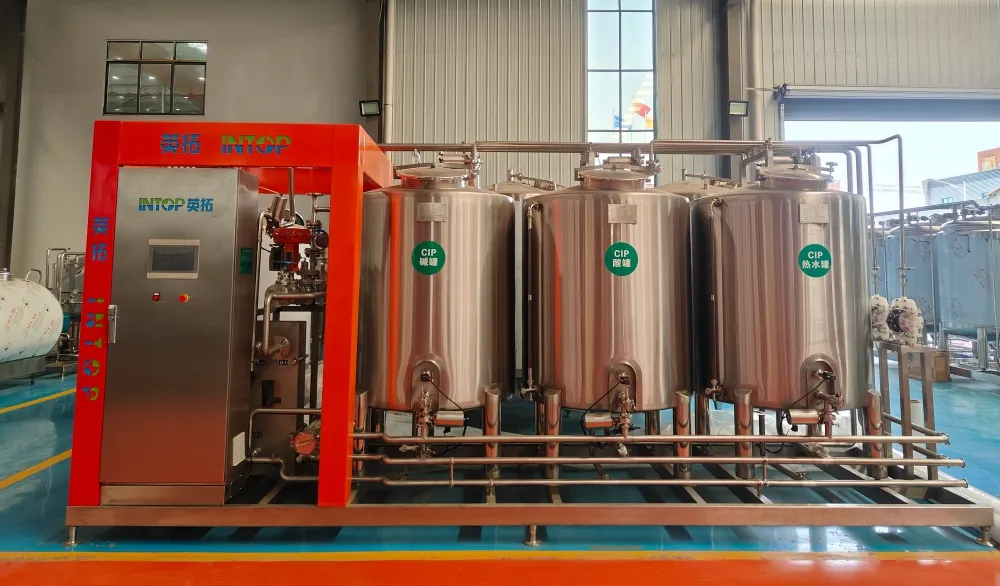
Tank Configuration Makes or Breaks Efficiency
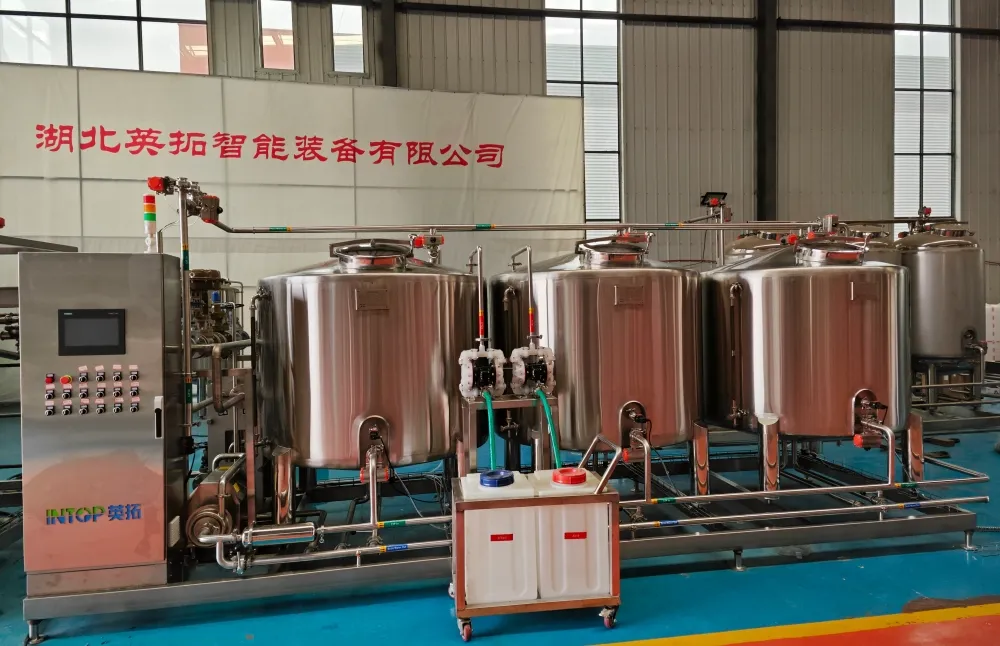
Single-tank CIP systems work for simple operations. But if you're running multiple products per day, you'll want at least a three-tank setup — one for alkaline solution, one for acid, one for rinse water. This lets you run sequences without waiting for a tank to drain and refill between steps.
For a 2,000–5,000 L/h beverage line, a three-tank CIP with solution recovery can cut cleaning time from 2–3 hours down to 60–90 minutes per changeover. That's the difference between running two products per day or four.
Solution Recovery Pays for Itself
CIP chemicals and hot water aren't cheap. A recovery system captures the final rinse water and reuses it as the pre-rinse for the next cycle. On a line doing daily product switches, it reduces water consumption by 30–40% and chemical usage by roughly the same margin. Payback periods of 12–18 months are common for mid-size operations.
Automation Level Determines Your Real Downtime
Manual CIP means an operator walks through each step — open valve, start pump, check temperature, time it. It works, but it's slow and inconsistent.
Fully automatic handles everything: valve routing, concentration dosing, temperature control, cycle timing, and data logging. It also records every cleaning cycle, which you'll need for food safety audits. For multi-product lines, the automatic routing capability matters most — the system needs to know which pipes, tanks, and fillers to clean for each product switch without manual intervention.
The Bottom Line
A CIP system that can't keep up with your production schedule becomes a bottleneck — no matter how good the rest of your line is. When you're planning a multi-product beverage operation, specify the CIP system with the same attention you give to processing and filling equipment. Capacity, tank configuration, automation level, and recovery features should all match your actual production pattern.
If you're not sure what configuration fits your product range and capacity, tell us what you're producing and how often you switch. We'll work out the right CIP setup for your line.
Related News
- Tubular UHT Sterilizer Technology Advances Support the Growth of Aseptic Beverage Processing
- What Makes a Strawberry Juice Production Line Efficient, Safe, and Ready for Commercial Scale?
- Bottled Water Production Line: 10 Factors Before Investment
- How to Build a Juice Production Line That Handles Multiple Fruit Types
- What It Takes to Scale an Energy Drink Production Line for Global Demand
- How Does a Water Treatment System Work in a Beverage Production Line?
Leave me a message