English
- English
- Afrikaans
- беларускі
- Hrvatski
- lugha ya Kiswahili
- ქართული
- Кыргыз тили
- Монгол хэл
- IsiXhosa
- Somali
- O'zbek
- Hawaiian
- Հայերեն
- Español
- Português
- русский
- Français
- 日本語
- Deutsch
- tiếng Việt
- Italiano
- Nederlands
- ภาษาไทย
- Polski
- 한국어
- Svenska
- magyar
- Malay
- বাংলা ভাষার
- Dansk
- Suomi
- हिन्दी
- Pilipino
- Türkçe
- Gaeilge
- العربية
- Indonesia
- تمل
- ελληνικά
- український
- فارسی
- български
- ລາວ
- Latine
- Қазақша
- Azərbaycan
- Македонски
- Lietuvos
- Română
- Srpski језик

What Makes a Production Line the Backbone of Modern Manufacturing Efficiency?
Table of Contents
-
Understanding the Core of a Production Line
-
Why Efficient Production Lines Shape Global Manufacturing
-
How Beverage and Juice Production Lines Work in Practice
-
Frequently Asked Questions About Production Lines
-
Contact Intop for Tailored Production Line Solutions
Understanding the Core of a Production Line
What defines a production line, and why does it stand at the center of today’s industrial progress?
A production line is a sequence of connected workstations arranged to produce specific goods continuously or semi-continuously. Each stage performs a dedicated task, ensuring precision, consistency, and speed. From automotive parts to beverages, production lines streamline manufacturing operations by minimizing downtime, waste, and manual labor.
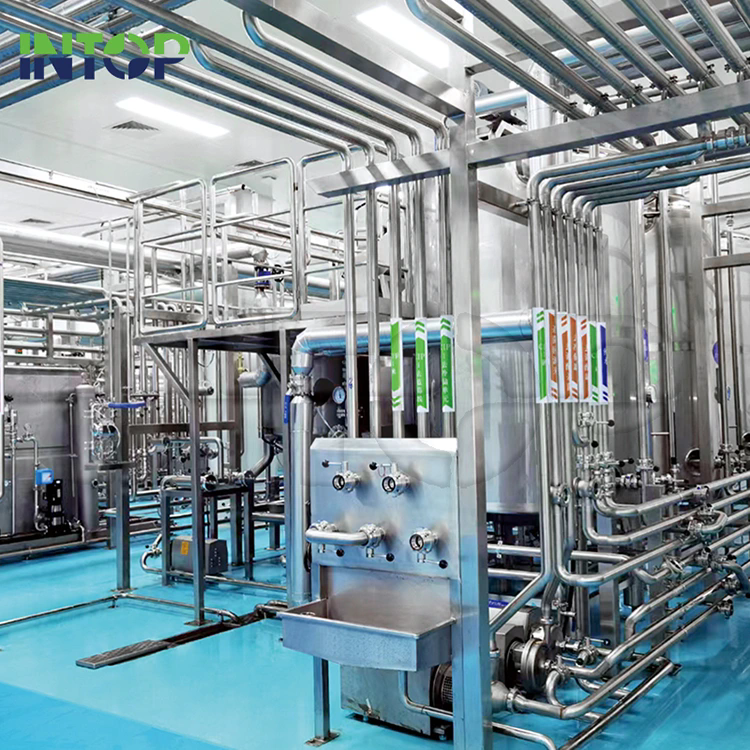
The concept of a production line lies in standardization and automation—two pillars of modern manufacturing success. Instead of crafting one product at a time, businesses rely on synchronized systems where raw materials are transformed step by step into finished goods. This method not only reduces human error but also enhances quality control.
Below is a general technical specification table that highlights key parameters manufacturers often consider when selecting or designing a production line:
| Parameter | Description | Standard Range / Option |
|---|---|---|
| Production Capacity | Output per hour or per day | 500 – 50,000 units/hour |
| Automation Level | Degree of system control | Manual / Semi-auto / Fully automated |
| Material Compatibility | Type of materials handled | Metal, plastic, liquid, powder |
| Power Supply | Electrical input requirement | 220V / 380V / Custom |
| Line Speed | Conveyor or operational speed | Adjustable 0–60 m/min |
| Temperature Control | Heating or cooling systems | Optional; ±2°C precision |
| PLC Control System | Integrated process control | Siemens / Mitsubishi / Omron |
| Maintenance Frequency | Recommended servicing interval | Every 6–12 months |
| Warranty & Service | After-sales support | 12–24 months standard |
This structured setup ensures that every operation—from raw material feeding to packaging—flows seamlessly. By integrating sensors, robotics, and programmable logic controllers (PLCs), a production line becomes a data-driven ecosystem, capable of self-monitoring and real-time optimization.
Why Efficient Production Lines Shape Global Manufacturing
Why do production lines determine a company’s competitive edge in the global market?
The answer lies in efficiency, cost reduction, and scalability. In modern industries, time is profit, and production lines transform that principle into measurable performance. They enable continuous operation, consistent quality output, and traceable production processes—all critical to meeting international standards and consumer expectations.
Key Benefits of Advanced Production Lines:
-
Consistency and Precision: Each product undergoes identical manufacturing conditions, ensuring uniform quality.
-
Labor Optimization: Automation reduces manual intervention, lowering labor costs while improving safety.
-
Energy Efficiency: Intelligent systems optimize power usage, contributing to sustainable operations.
-
Data Integration: Smart sensors collect data for predictive maintenance and productivity analysis.
-
Scalability: Production capacity can be expanded easily without major structural changes.
Technological Innovations Driving Modern Production Lines
-
IoT Integration: Real-time monitoring of machinery performance and energy consumption.
-
AI-Based Quality Control: Automated inspection for defects and dimensional accuracy.
-
Smart Conveyors: Adaptive speed control responding to production flow.
-
Modular Design: Quick reconfiguration for multiple product variants.
Such innovations are reshaping industries ranging from food and beverage to automotive and electronics, enabling factories to adapt rapidly to changing market demands.
How Beverage and Juice Production Lines Work in Practice
Beverage Production Line
How does a beverage production line ensure purity, flavor consistency, and shelf stability?
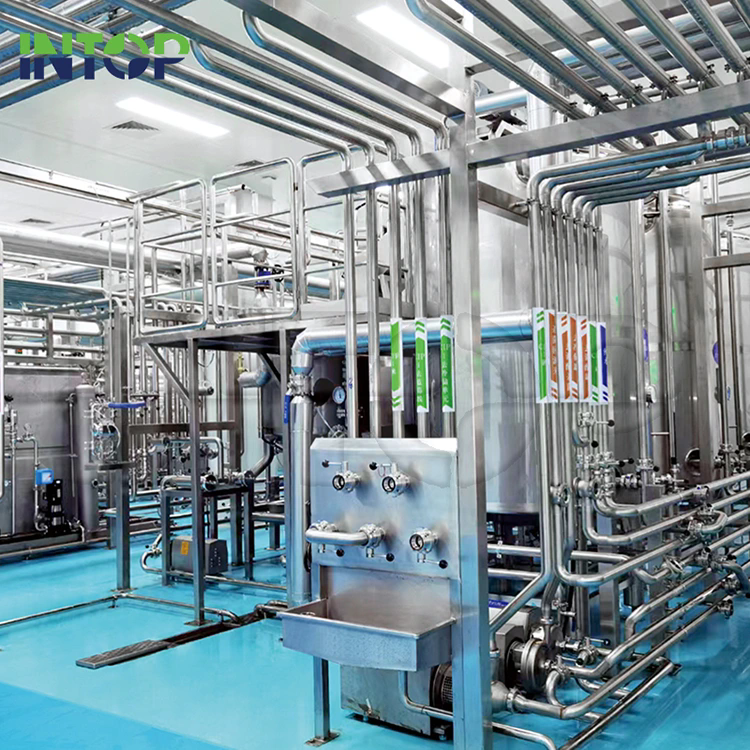
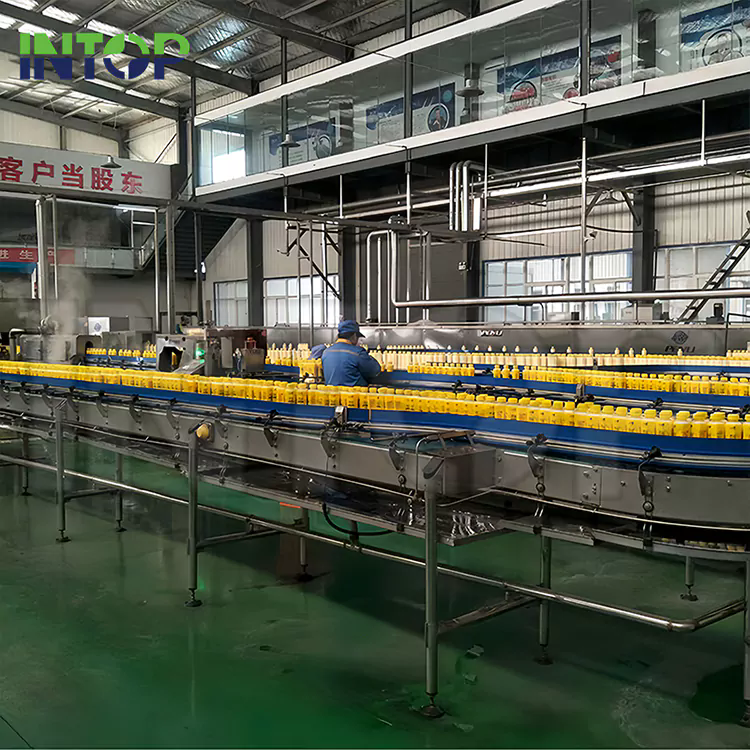
A beverage production line integrates automated systems for water treatment, blending, filling, capping, labeling, and packaging. Each stage adheres to strict hygiene and temperature controls, ensuring the final product meets food safety standards.
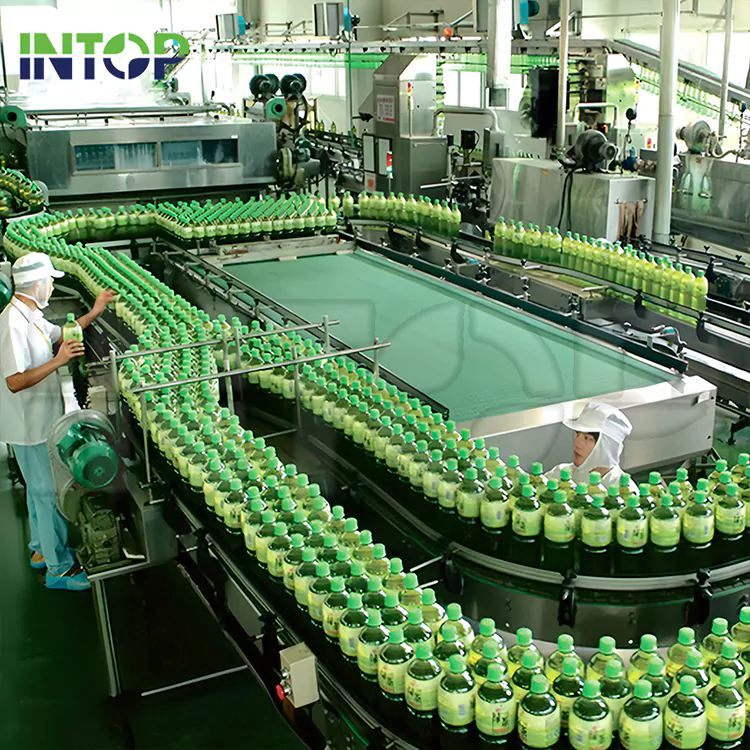
Typical Beverage Production Line Process:
-
Water Purification: Filtration and sterilization to achieve food-grade quality.
-
Syrup Preparation: Mixing sugar, additives, and flavors in precise ratios.
-
Blending & Mixing: Homogenizing liquids for uniform texture and taste.
-
Carbonation (Optional): CO₂ injection for sparkling beverages.
-
Filling & Capping: High-speed filling under sterile conditions.
-
Labeling & Packaging: Automated systems for consistent branding and sealing.
Technical Specification Example – Beverage Line
| Component | Function | Specification |
|---|---|---|
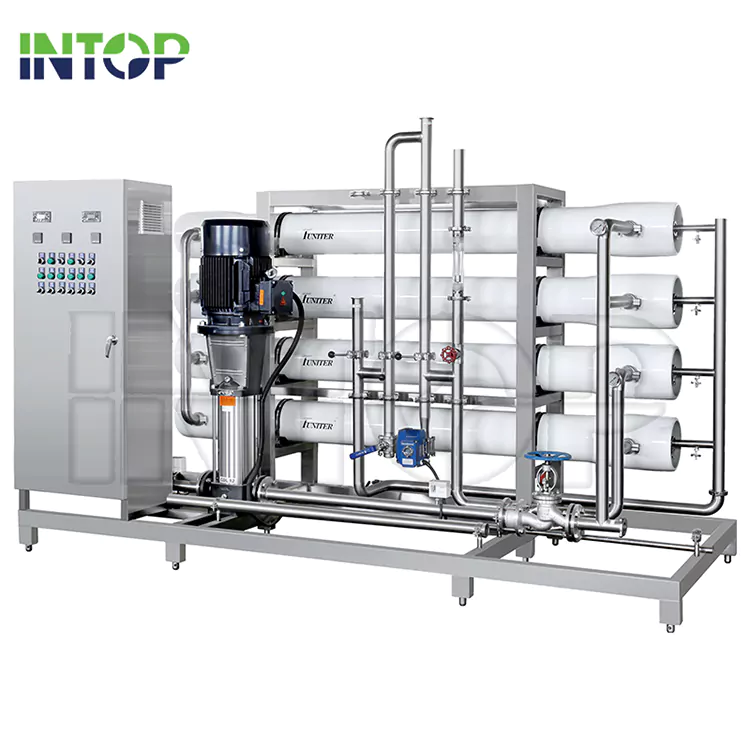
| Water Treatment Unit | Purifies source water | 1,000–20,000 L/h |
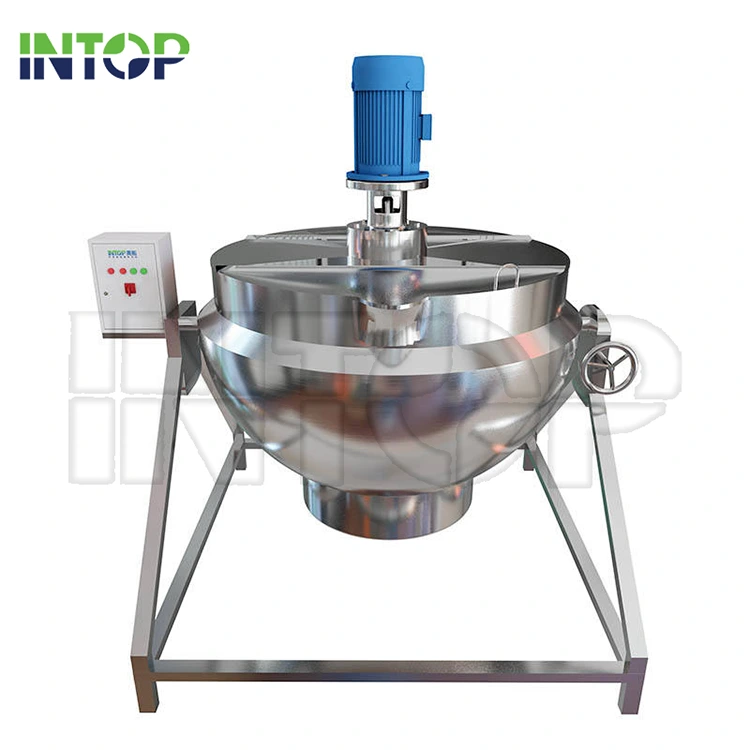
| Mixing Tank | Combines ingredients | Stainless steel SUS304 |
| Filling Machine | Fills bottles under pressure | 2000–24000 BPH |
| Capping System | Seals with precision torque | 100–500 bottles/min |
| Labeling Unit | Applies adhesive or shrink sleeve labels | 0.1 mm accuracy |
| PLC Control Panel | Controls full line operation | Siemens / Schneider |
| Packaging Conveyor | Transfers products | Adjustable speed control |
The beverage production line offers customization flexibility, allowing manufacturers to adapt to multiple packaging formats—PET, glass, or cans—and varied beverage types such as carbonated drinks, mineral water, or flavored sodas.
Juice Production Line
What differentiates a juice production line from general beverage manufacturing?
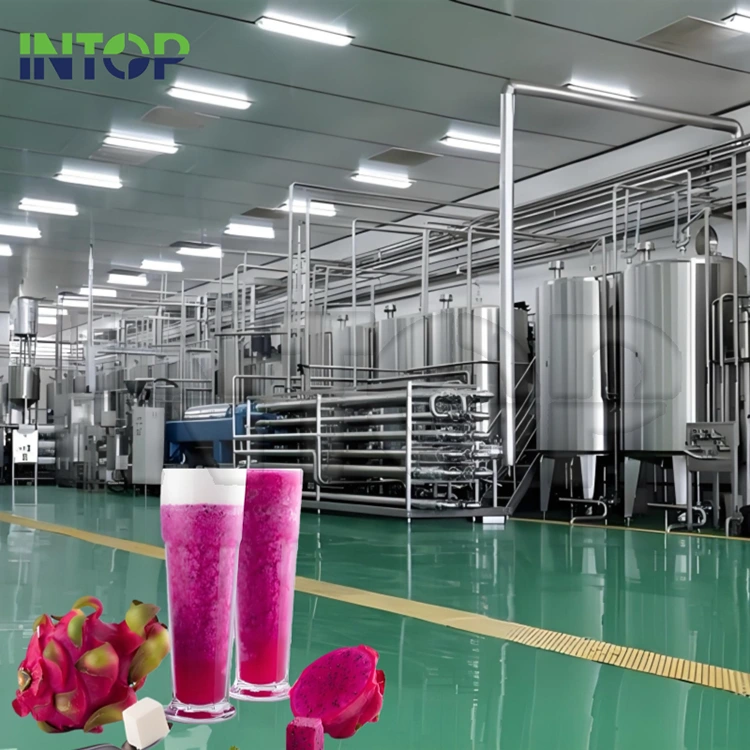
The core difference lies in pulp handling, pasteurization, and filling temperature. Juice lines are designed for viscous liquids that contain natural fibers and pulp, requiring advanced filtration and heat control systems to preserve nutrients and flavor.
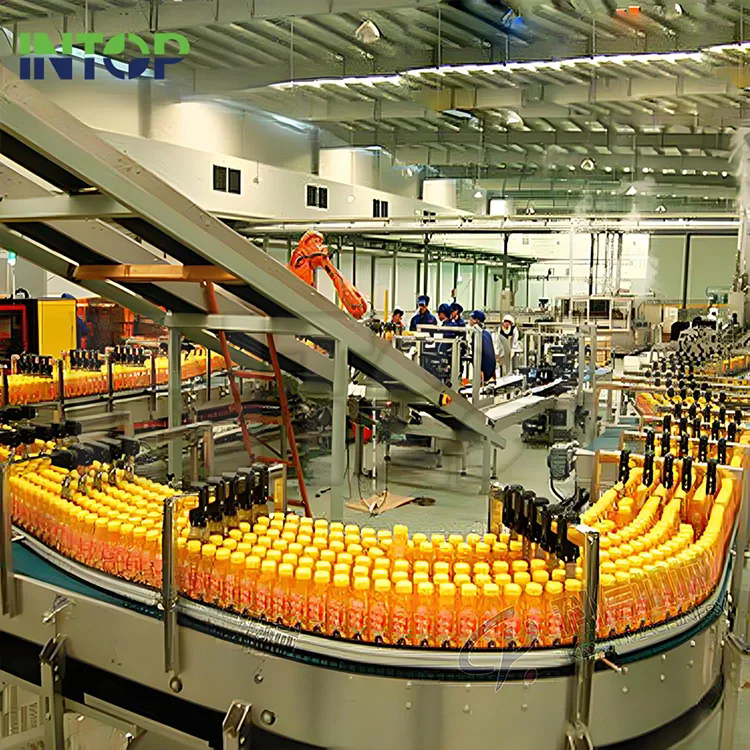
Juice Production Workflow
-
Fruit Reception and Sorting: Automated conveyors sort fruits by size and quality.
-
Washing and Peeling: Removes contaminants to maintain hygiene standards.
-
Juicing and Filtration: Extracts liquid and separates pulp or seeds.
-
Pasteurization: Heat treatment (85–95°C) to eliminate microorganisms.
-
Blending and Flavor Adjustment: Ensures taste consistency and color.
-
Hot Filling and Sealing: Sterile environment prevents contamination.
-
Cooling and Labeling: Rapid cooling retains freshness before packaging.
Technical Specification Example – Juice Line
| Component | Specification | Performance |
|---|---|---|
| Fruit Washer | Rotary spray washing | 2000–15000 kg/h |
| Pulper & Refiner | Extracts pulp and separates fibers | 1.5–10 tons/hour |
| Pasteurizer | Plate or tubular system | 85–95°C ±1°C |
| Homogenizer | Ensures uniform texture | 20–30 MPa pressure |
| Filling Machine | Hot filling under sterile conditions | 2000–18000 BPH |
| Cooling Tunnel | Rapid cooling post-fill | 35°C to ambient in 5 min |
| Labeling & Packing | Full-automatic wrap-around | Customizable formats |
With consumer demand for healthy, fresh, and preservative-free beverages on the rise, juice production lines are increasingly integrated with smart monitoring systems to guarantee traceability and compliance with international food safety standards.
Frequently Asked Questions About Production Lines
Q1: How long does it take to install a complete production line?
A: Installation time varies depending on the production scale. A small-capacity line may take 2–3 weeks, while a large fully automated system can require 2–3 months, including testing and staff training.
Q2: Can production lines handle multiple product types?
A: Yes, most modern lines are modular and can switch between different SKUs with minimal downtime by adjusting filling volumes, packaging dimensions, or control parameters.
Q3: What maintenance is required for a production line?
A: Regular cleaning, lubrication, and sensor calibration are essential. Preventive maintenance every 6–12 months helps avoid breakdowns, while digital monitoring systems can predict issues before they impact production.
Contact Intop for Tailored Production Line Solutions
The evolution of manufacturing depends on adaptability, precision, and innovation. From beverage bottling to juice processing, production lines have transformed industries by merging technology with craftsmanship. Each stage—from ingredient preparation to packaging—reflects the art of controlled efficiency.
Intop stands at the forefront of this evolution, offering custom-engineered production lines designed for reliability, scalability, and energy efficiency. With a proven track record across beverage, food, and industrial sectors, Intop integrates advanced automation systems that deliver consistent performance and reduced operational costs.
Whether you need a turnkey solution for a beverage production line or a tailored setup for a juice manufacturing facility, Intop provides end-to-end project support—from consultation to installation and after-sales service.
For more information or to request a detailed quotation, contact us to discover how Intop can help optimize your production efficiency and elevate your manufacturing capabilities.
Related News
- What Makes a Strawberry Juice Production Line Efficient, Safe, and Ready for Commercial Scale?
- Bottled Water Production Line: 10 Factors Before Investment
- How to Build a Juice Production Line That Handles Multiple Fruit Types
- What It Takes to Scale an Energy Drink Production Line for Global Demand
- How Does a Water Treatment System Work in a Beverage Production Line?
- How to Choose a CIP System for Multi-Product Beverage Production Lines
Leave me a message