English
- English
- Afrikaans
- беларускі
- Hrvatski
- lugha ya Kiswahili
- ქართული
- Кыргыз тили
- Монгол хэл
- IsiXhosa
- Somali
- O'zbek
- Hawaiian
- Հայերեն
- Español
- Português
- русский
- Français
- 日本語
- Deutsch
- tiếng Việt
- Italiano
- Nederlands
- ภาษาไทย
- Polski
- 한국어
- Svenska
- magyar
- Malay
- বাংলা ভাষার
- Dansk
- Suomi
- हिन्दी
- Pilipino
- Türkçe
- Gaeilge
- العربية
- Indonesia
- تمل
- ελληνικά
- український
- فارسی
- български
- ລາວ
- Latine
- Қазақша
- Azərbaycan
- Македонски
- Lietuvos
- Română
- Srpski језик

Building a Milk & Yogurt Production Line at 500–1000 L/h: What You Actually Need
Dairy producers scaling up from small operations often face the same challenge: they want to produce both milk and yogurt without investing in two complete production lines. At 500–1000 liters per hour, equipment costs need to be carefully balanced against production capacity and flexibility.
Can one line handle both products?
Yes. A shared line can produce milk and yogurt in separate production runs. Milk is processed and filled first, followed by cleaning and a changeover to yogurt production. The same core equipment and selected pipework can serve both products, provided the line is designed for hygienic product separation, effective cleaning, and controlled changeovers.
The key is to make switching between products efficient, safe, and straightforward to operate.
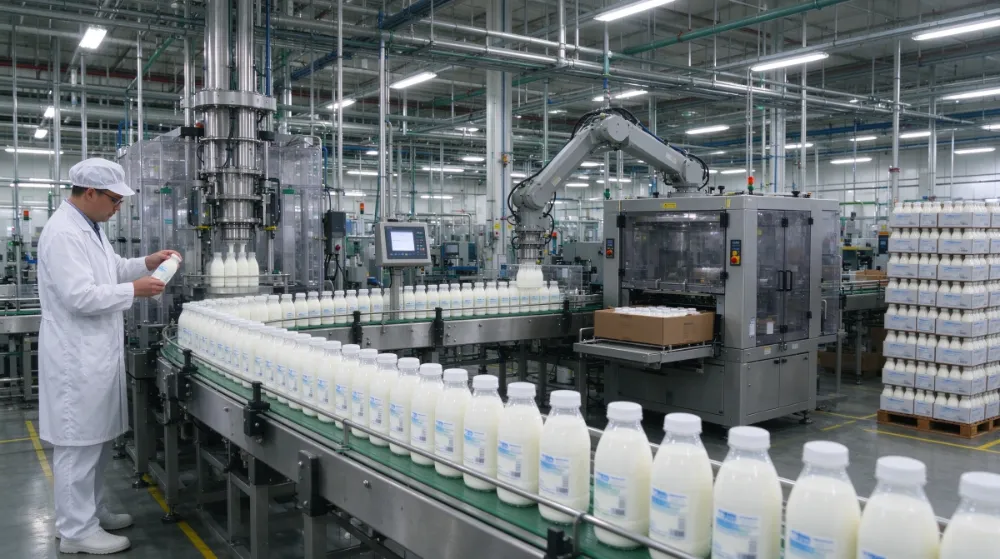
The Flow: It's Simpler Than You'd Expect
Milk enters the line, passes through filtration and homogenization, and undergoes heat treatment before being directed to the filling machine. For yogurt, the treated milk is cooled to the required fermentation temperature, transferred to a fermentation tank, and held until the target acidity is reached. The yogurt is then cooled and pumped to the same filler.
Milk path: Raw Milk → Filter → Homogenizer → Heat Treatment → Cooling → Filling
Yogurt path: Raw Milk → Filter → Homogenizer → Heat Treatment → Cooling to Fermentation Temperature → Fermentation → Cooling → Filling
A shared line can reduce equipment duplication, but the product routes, temperature settings, and cleaning procedures must be designed around the requirements of each product.
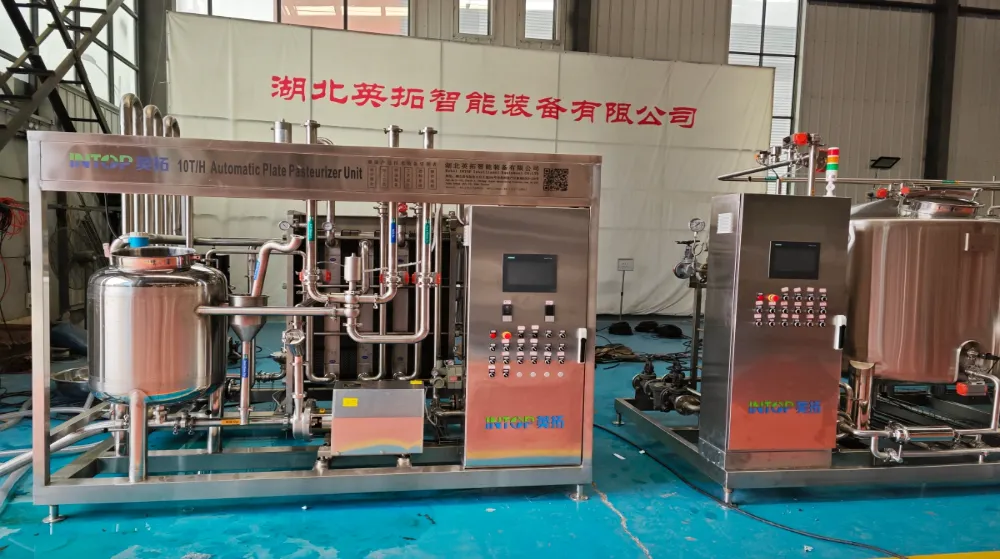
The Plate Heat Treatment System—A Key Part of the Line
The heat treatment system is one of the most important components to specify correctly.
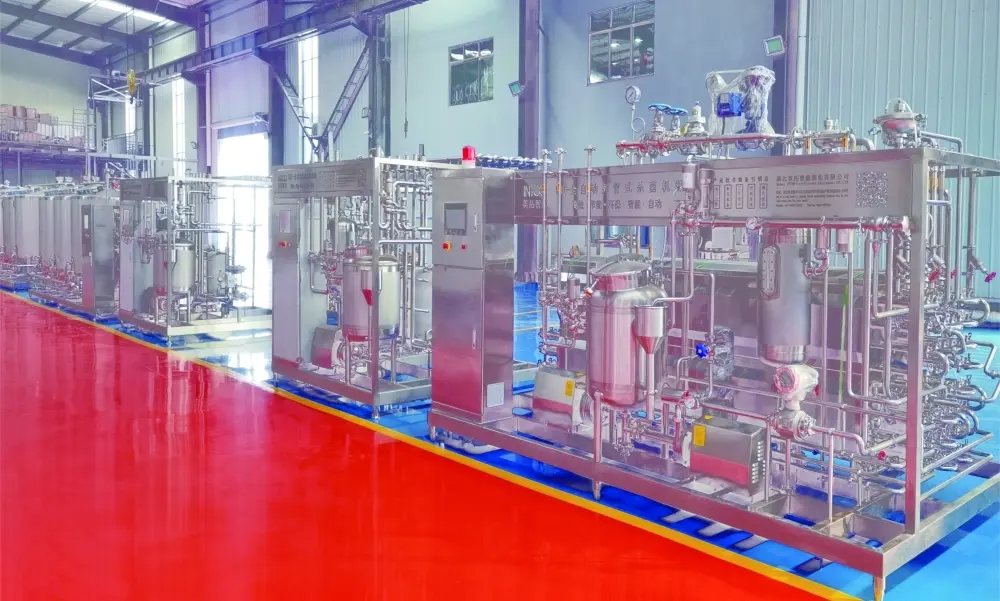
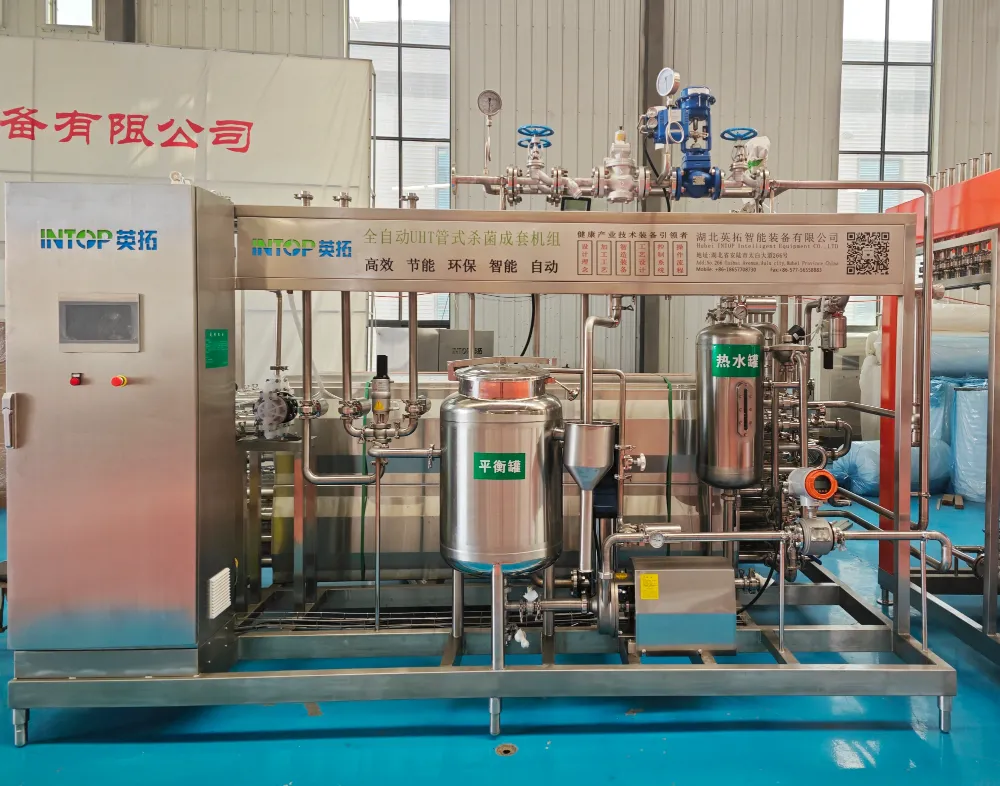
A plate heat exchanger-based system heats milk to a target temperature, holds it for the required time, and then cools it. Milk pasteurization must meet the applicable time-temperature requirements. Yogurt base is commonly heated at a higher temperature and held for a specified period to promote protein denaturation and support the desired yogurt texture.
When specifying the system, consider its operating temperature range, holding-time control, cooling capacity, and compatibility with the intended products. A range of 80–135°C may be relevant to certain processing requirements, but it is not a universal specification for a basic milk and yogurt line. The required range should match the planned process.
EPDM or silicone gaskets may be suitable depending on the actual operating temperature, cleaning chemicals, and equipment design. Gasket compatibility should be assessed across the intended operating and cleaning conditions.
A built-in CIP function is also worth considering. It allows cleaning solutions to circulate through the system's internal plate channels during the cleaning cycle. However, the heat treatment equipment's CIP function does not replace the CIP system required for the rest of the production line. The overall design should account for cleaning supply, return flow, chemical handling, and process verification.
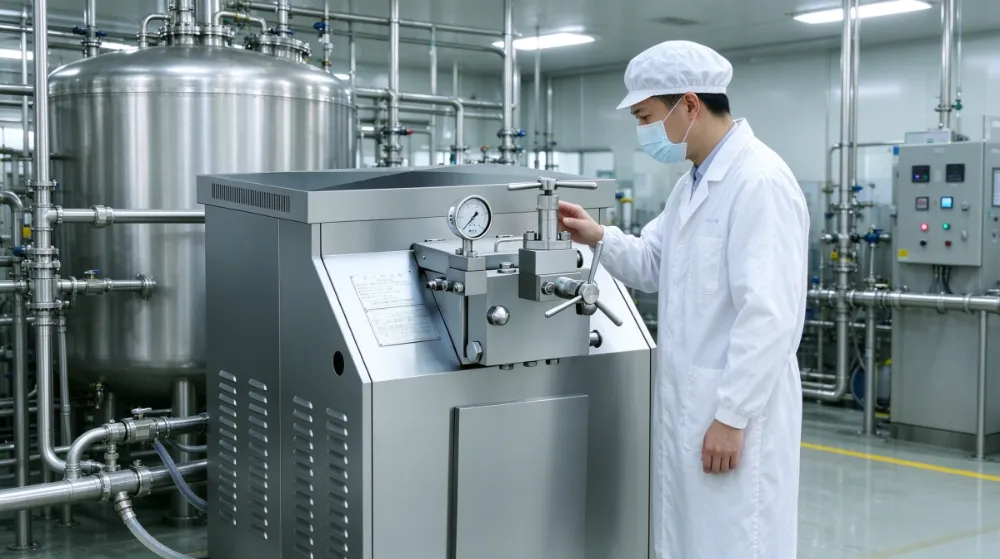
Homogenizer
A homogenizer forces milk through a narrow gap under pressure, reducing fat globules so they remain more evenly distributed instead of rising to form a cream layer. In milk production, homogenization helps maintain a consistent appearance and can support product stability. In yogurt production, it can contribute to a smoother texture and reduced whey separation when combined with suitable heat treatment and fermentation conditions.
One homogenizer may serve both products, provided its capacity and operating settings meet the requirements of each process.
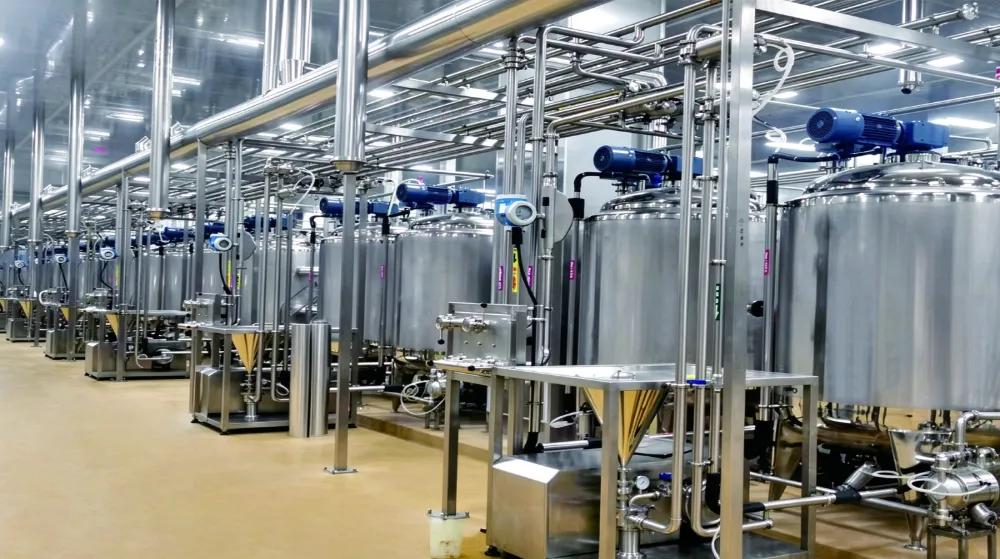
Fermentation Tanks — Managing Production Time
Yogurt fermentation takes time. After the milk has been heat-treated, cooled to the appropriate temperature, and inoculated with starter cultures, it is held under controlled conditions until the target acidity is reached. Fermentation commonly takes around four to six hours, although the actual duration depends on the culture, temperature, and formulation.
Jacketed tanks can maintain fermentation temperature using a suitable heating or temperature-control system. Once the target pH is reached, cooling should begin promptly to slow fermentation and limit further acid development. The cooling system must be sized to bring the product to the required temperature within the planned process time.
Two fermentation tanks can improve production scheduling by allowing batches to run in staggered cycles. While one batch is fermenting, the second tank can be prepared for another batch. This arrangement may reduce filler downtime, but the required number and capacity of tanks should be calculated from batch volume, fermentation time, cooling time, and filling capacity.
For stirred yogurt, an agitator is generally required to break the gel after fermentation and produce the desired consistency before filling. Agitation intensity and duration affect the final texture, so the system should suit the product formulation and intended viscosity.
The Filler
One filling machine may handle both products if it is designed for the required range of viscosities, container formats, and filling speeds. Milk flows easily, while stirred yogurt is thicker and more sensitive to mechanical handling.
Piston filling machines are one option because they can meter products across a range of viscosities. However, the final choice should account for filling accuracy, product characteristics, sanitation requirements, and production speed rather than relying on filling principle alone.
Container format is another important consideration. If milk and yogurt use the same bottle format, changeover may involve mainly product-line cleaning and filling-setting adjustments. If milk is packed in bottles while yogurt is packed in cups, changing guide rails, container-handling components, or sealing equipment may increase downtime. In some cases, a separate small filler may be more practical than repeated mechanical changeovers.
Filling nozzles should be selected to minimize splashing, foaming, and air entrainment. Bottom-up filling can be useful for suitable bottle formats, but the nozzle design should match the container and product characteristics.
CIP: Cleaning the Entire Production Line
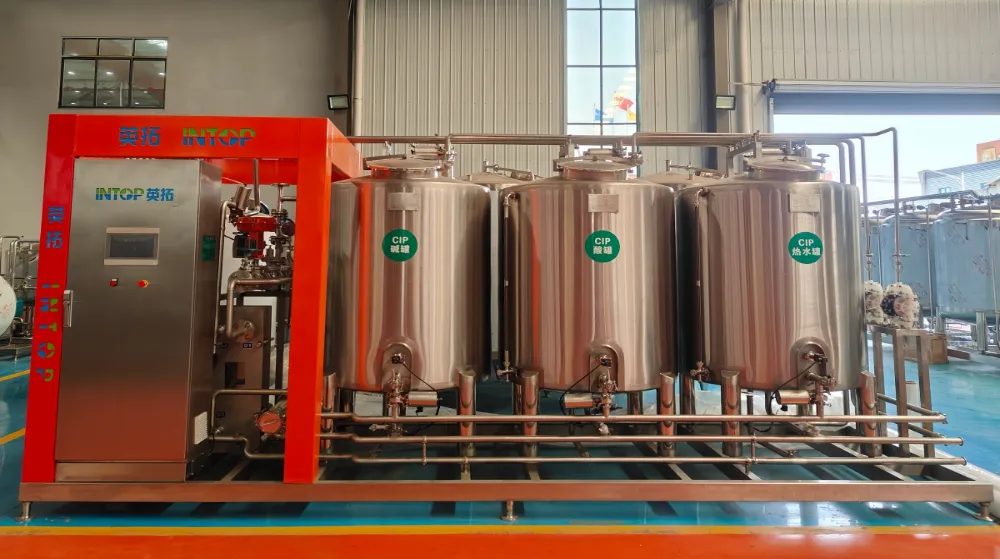
CIP, or clean-in-place, circulates cleaning solutions through pipes, tanks, and compatible equipment without dismantling them. Cleaning procedures are particularly important when switching between milk and yogurt because product residues can affect hygiene, product quality, and subsequent fermentation.
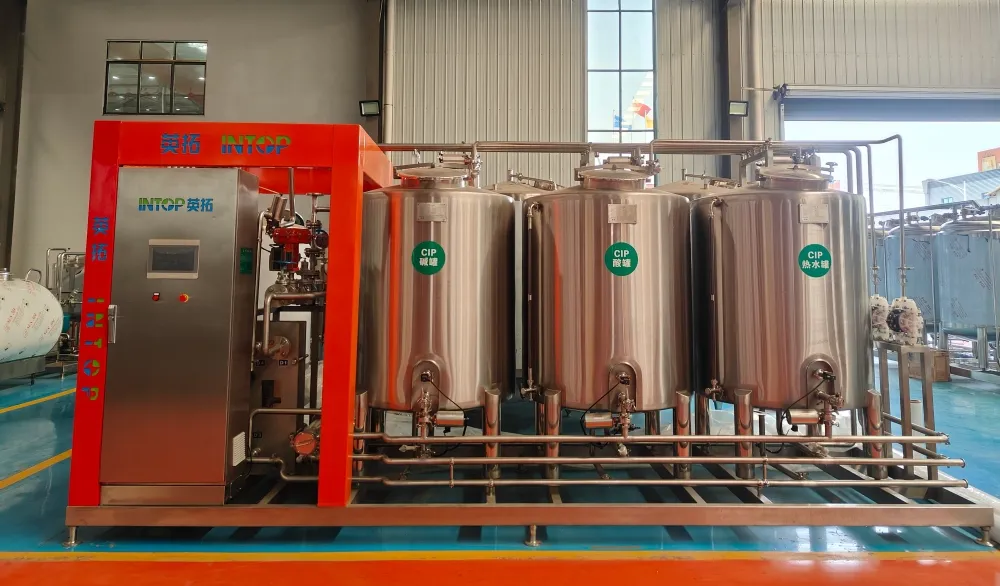
A plate heat treatment system with built-in CIP can clean its internal plate channels. The remaining equipment—including product pipes, fermentation tanks, and the filling machine—must also be incorporated into an appropriate cleaning arrangement. Depending on the plant design, this may require a dedicated CIP supply unit serving the relevant circuits.
A typical CIP sequence may include a pre-rinse, alkaline wash to remove fat and protein residues, an intermediate rinse, an acid wash to remove mineral deposits, and a final rinse. The exact sequence, chemical concentration, temperature, flow rate, and contact time should be established for the equipment and soil load. A 30–40 minute cycle may be achievable in some systems, but should not be treated as a universal cleaning duration.
Yogurt residues can require different cleaning parameters from milk residues. The control system can store separate cleaning recipes for milk and yogurt production, with parameters established through cleaning validation.
A CIP interlock is also worth considering. The PLC can prevent production from starting until the required cleaning cycle and release conditions have been satisfied. It can also prevent cleaning sequences from starting while incompatible product-transfer operations are active. These controls reduce the risk of operator error and help maintain consistent cleaning procedures.
Floor Layout
A 500–1000 L/h line does not require the footprint of a large industrial dairy plant, but the layout still needs to support hygienic processing and efficient movement between operations.
Three functional zones are useful. The raw milk area contains intake equipment, filtration, and any raw milk holding tank. The processing area houses equipment such as the homogenizer, heat treatment system, and fermentation tanks. The filling area contains the filler, capper or sealer, and conveyor.
The raw milk area should be separated from post-treatment handling and filling operations to reduce the risk of cross-contamination. Physical separation, controlled access, and hygienic personnel and material flows should be incorporated according to the plant's food safety requirements.
Automation — Three Functions Worth Considering
A 500–1000 L/h line does not necessarily need full automation. Some operations can remain manual, depending on production volume and staffing. However, several control functions can improve process consistency and reduce operating errors.
Recipe switching. The HMI can provide separate milk and yogurt recipes, with defined heat treatment, holding time, and cooling settings for each product. This reduces the risk of using the wrong process settings during a changeover.
pH-triggered cooling. An inline pH probe connected to the PLC can initiate cooling when the target pH is reached. This can improve batch-to-batch consistency, provided the sensor, control logic, and cooling response are validated for the product and process.
CIP safety interlock. The system can prevent production from restarting until the required cleaning cycle has been completed and the applicable release conditions have been met.
Two Design Issues Worth Learning From
One common design issue is oversizing the buffer tank between the heat treatment system and the filler. A larger buffer may appear to provide flexibility, but it can increase product holding time. If temperature control and hygienic design are inadequate, extended holding may affect product quality and shelf life. Buffer capacity should therefore be matched to filling demand, product temperature, and the planned operating sequence.
Another issue is leaving no provision for future product extensions. A line initially designed for plain milk and yogurt may later need fruit dosing or other product-handling equipment. Retrofitting these additions can require changes to pipework, controls, and floor layout. Allowing suitable connection points and space for future equipment during the initial design can reduce the complexity of later modifications.
What You Actually Need to Buy
Raw milk intake station with a flow meter and filter
One homogenizer sized for both products
One heat treatment system with appropriate temperature and holding-time control
Gaskets compatible with operating temperatures and cleaning chemicals
Jacketed fermentation tanks sized for the planned batch volume and production schedule
A filling machine suitable for both milk and yogurt viscosities and the selected container formats
Filling nozzles matched to the containers and products
A CIP supply unit for the required production circuits, with validated cleaning programs
CIP safety interlocks in the PLC
A control panel with separate milk and yogurt recipes
An inline pH probe and cooling control, if required by the selected fermentation process
The final equipment configuration should reflect the actual products, batch sizes, packaging formats, operating schedule, and food safety requirements.
On Cost
A reliable cost estimate requires details such as container formats, factory layout, applicable food safety regulations, product formulations, and the required level of automation.
A shared, sequential line can reduce capital expenditure by combining selected processing, transfer, and filling equipment. The actual savings compared with two dedicated lines depend on the degree of equipment sharing, cleaning requirements, packaging formats, and production capacity.
Operational simplicity can also be valuable. Sharing equipment may reduce duplicated machinery, spare parts, and maintenance requirements, although staffing and cleaning workloads still depend on the production schedule.
For projects in the planning stage, the most useful starting point is to define the products, target capacity, packaging formats, available factory space, and future expansion plans. These factors provide the basis for selecting equipment and designing a milk and yogurt production line that fits the intended operation.
Next :
-
Related News
- How to Choose a Juice Extraction Machine for Your Juice Production Line
- Tubular UHT Sterilizer Technology Advances Support the Growth of Aseptic Beverage Processing
- What Makes a Strawberry Juice Production Line Efficient, Safe, and Ready for Commercial Scale?
- Bottled Water Production Line: 10 Factors Before Investment
- How to Build a Juice Production Line That Handles Multiple Fruit Types
- What It Takes to Scale an Energy Drink Production Line for Global Demand
Leave me a message