News

Bottling lines: Technological evolution, scenario applications, and optimization strategies​

2025-10-09 0 Leave me a message

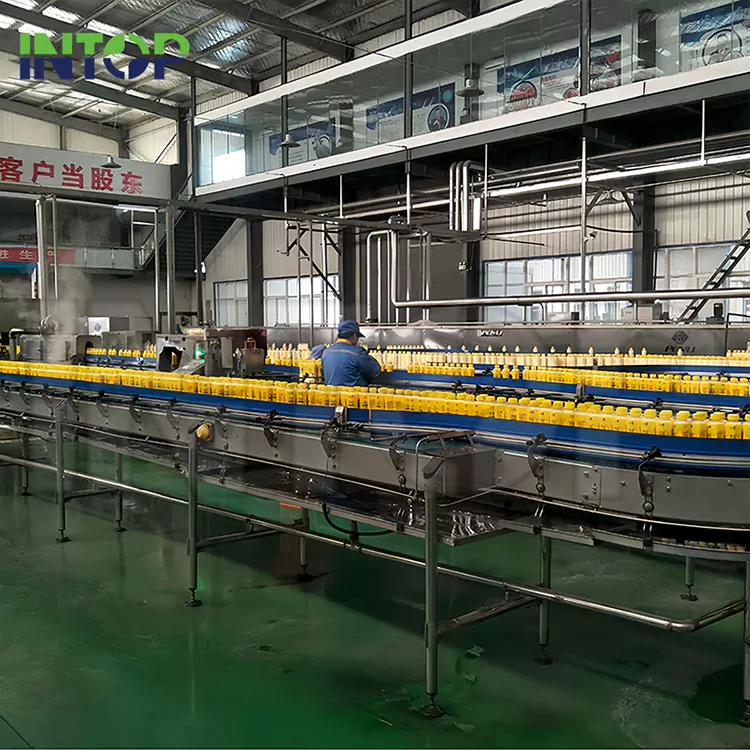
Bottling lines are integrated systems of pharmaceutical packaging equipment using bottles as containers. They feature excellent sealing, low transportation costs, and minimal storage space, making them widely used in the pharmaceutical packaging industry. Their core functions include seven basic processes: automatic bottle unscrambling, air-blowing and washing, tablet counting and filling, excipient insertion, capping and sealing, and labeling. These processes are connected in series through modular equipment to form a complete packaging process.


Equipment selection is diverse, with various technical implementations and speed ratings available for each functional module. For example, tablet counters can be categorized as sieve-type, crawler-type, and electronic disc-type, with production capacities ranging from 30 to 120 bottles per minute. When configuring a production line, users must combine functional modules based on their specific needs, focusing on the dosage form, filling volume, and production scale. The overall line speed should be determined by converting the tablet counter's capacity, balancing equipment compatibility and cost-effectiveness. Hundreds of possible combinations of different functional modules are available, and companies must optimize their selection based on their specific process requirements.


Since each basic function can be implemented using a variety of operating principles, a wide range of machine types can be derived from each basic function. For example, tablet counters, as a basic function, are available on the market in a variety of models: screen-type, crawler-type, multi-channel electronic, and disc-type electronic. Further categorized by production capacity, these machines can be classified into: low-speed (30-40 bottles/minute), medium-speed (50-70 bottles/minute), and high-speed (80-120 bottles/minute). Combining different machine models with varying speeds offers 28 different options. Adding in customizable features, the number of options can reach hundreds. Clearly, there are so many options for just one tablet counting function. So, how do we choose the right machine for an entire bottling line? To correctly select a packaging line, pharmaceutical companies must be realistic and objective in their needs. They should choose the product with the best value and service based on their financial capabilities. This can be done by considering the following factors: 1. Basic Functions and Speed Requirements. Basic functions refer to the tasks a pharmaceutical company needs a packaging line to perform. Some pharmaceutical companies may not need "bottle washing" and "piping" among the seven basic functions. In this case, this bottling line only requires a bottle unscrambler, tablet counter, capper, sealer, and labeler. Speed requirements refer to the production capacity of the packaging line (the speed of the packaging), and pharmaceutical companies should make their selection based on their actual needs. The capacity of a bottling line is generally measured in bottles filled per minute, or "bottles/minute." It's important to note how many pills are filled in each bottle. To avoid misunderstandings, the indicators provided by domestic pharmaceutical machinery manufacturers refer to the number of bottles a packaging line can fill per minute, assuming each bottle holds 100 pills. Therefore, "bottles/minute" is an equivalent unit. Users must understand this when purchasing equipment to avoid misleading customers. Some electronic tablet counters also express their capacity in tablets per minute. Users should convert their bottle filling volume into bottles per minute and then determine the speed of the entire packaging line. Choosing the speed of a bottling line begins with selecting the tablet counter, as its capacity is related to both the dosage form and the bottle filling volume. For example, if a tablet counter is required with a capacity of 60 bottles per minute, the table below shows that different options are available for different dosage forms, bottle filling volumes, and drug sizes. If more than two models are available for a particular drug, the price of each model and the user's personal preference will be considered.


Related News
Leave me a message
X
We use cookies to offer you a better browsing experience, analyze site traffic and personalize content. By using this site, you agree to our use of cookies. Privacy Policy
RejectAccept