English
- English
- Afrikaans
- беларускі
- Hrvatski
- lugha ya Kiswahili
- ქართული
- Кыргыз тили
- Монгол хэл
- IsiXhosa
- Somali
- O'zbek
- Hawaiian
- Հայերեն
- Español
- Português
- русский
- Français
- 日本語
- Deutsch
- tiếng Việt
- Italiano
- Nederlands
- ภาษาไทย
- Polski
- 한국어
- Svenska
- magyar
- Malay
- বাংলা ভাষার
- Dansk
- Suomi
- हिन्दी
- Pilipino
- Türkçe
- Gaeilge
- العربية
- Indonesia
- تمل
- ελληνικά
- український
- فارسی
- български
- ລາວ
- Latine
- Қазақша
- Azərbaycan
- Македонски
- Lietuvos
- Română
- Srpski језик

How Does a Tunnel Spray Pasteurizer Ensure Consistent Thermal Processing in Beverage Production?
Article Abstract
A Tunnel Spray Pasteurizer is a continuous thermal processing system widely used in beverage and liquid food industries to ensure microbiological stability after packaging. This article focuses on how tunnel spray pasteurization works, why it is applied in modern production lines, and how its technical configuration supports consistent product quality.
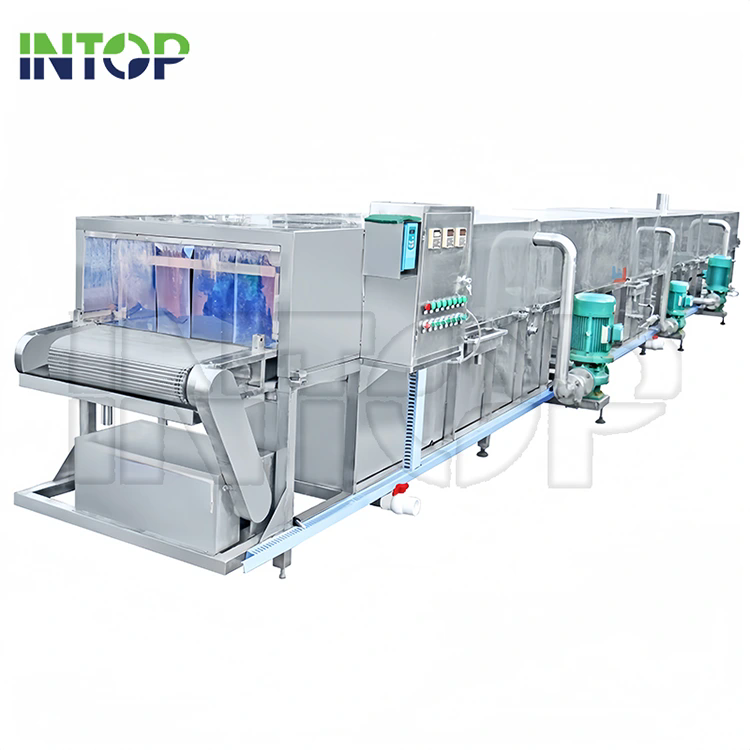
Table of Contents
- 1. How Is a Tunnel Spray Pasteurizer Defined in Industrial Applications?
- 2. How Do Technical Parameters Influence Tunnel Spray Pasteurization Performance?
- 3. How Does the Tunnel Spray Pasteurization Process Work Step by Step?
- 4. How Are Common Tunnel Spray Pasteurizer Questions Addressed in Practice?
- Conclusion and Industry Outlook
1. How Is a Tunnel Spray Pasteurizer Defined in Industrial Applications?
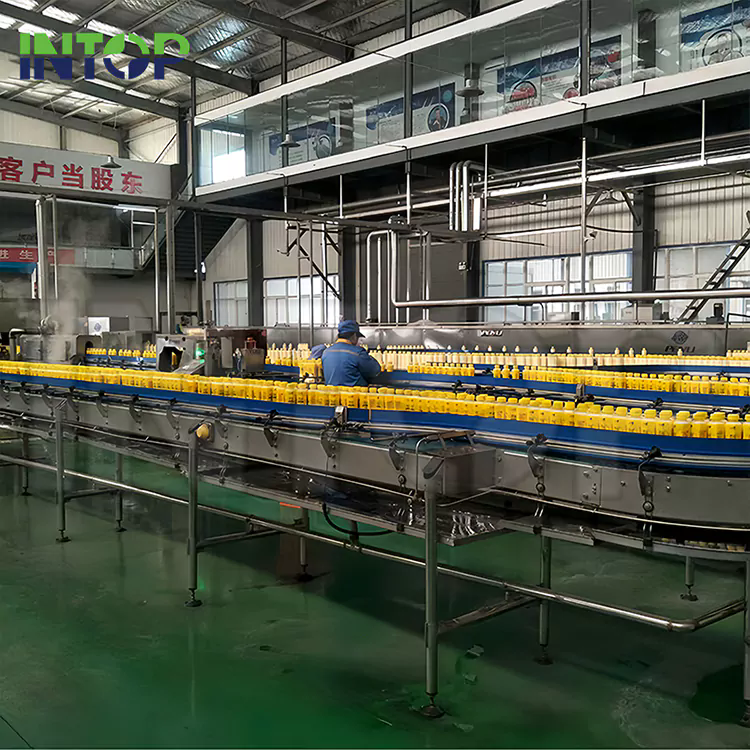
A Tunnel Spray Pasteurizer is an enclosed conveyor-based system designed to thermally treat sealed containers such as glass bottles, PET bottles, aluminum cans, and jars. Unlike batch pasteurization, this equipment operates continuously, allowing products to pass through multiple temperature zones under controlled water spray conditions.
The core objective of a tunnel spray pasteurizer is to achieve a specific pasteurization unit (PU) value while maintaining container integrity and product sensory stability. This is accomplished by gradually heating, holding, and cooling the product using recirculated hot and cold water sprayed over container surfaces.
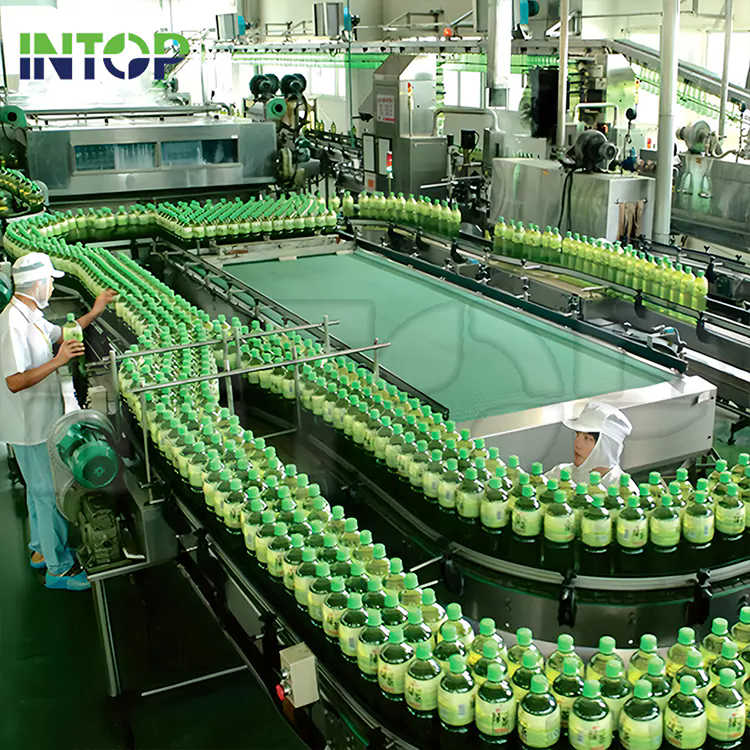
From a process control perspective, tunnel spray pasteurizers are positioned downstream of filling and sealing operations. Their integration supports high-throughput production lines commonly found in beer, carbonated soft drinks, juice, tea beverages, and functional drink manufacturing facilities.
2. How Do Technical Parameters Influence Tunnel Spray Pasteurization Performance?
Technical parameters define how effectively a tunnel spray pasteurizer performs thermal treatment while ensuring energy efficiency and process repeatability. These parameters are selected based on container type, product formulation, target shelf life, and regulatory requirements.
| Parameter | Typical Range | Technical Significance |
|---|---|---|
| Conveyor Speed | 2–12 m/min | Determines total residence time and PU accumulation |
| Pasteurization Temperature | 60–95°C | Controls microbial inactivation efficiency |
| Heating Zones | 2–4 sections | Ensures gradual temperature increase |
| Holding Zone Length | Customizable | Maintains target temperature for required duration |
| Cooling Zones | 2–3 sections | Prevents thermal shock to containers |
| Water Recirculation Rate | High-efficiency loop | Optimizes energy and water consumption |
These parameters are managed through programmable logic controllers (PLC) and human-machine interfaces (HMI), enabling real-time monitoring, alarm handling, and data logging. Precision in parameter control directly correlates with process stability and compliance with food safety standards.
3. How Does the Tunnel Spray Pasteurization Process Work Step by Step?
The tunnel spray pasteurization process is structured into sequential thermal zones, each serving a specific function within the overall heat treatment cycle.
How Is Preheating Achieved Without Container Stress?
Preheating zones gradually raise container surface temperature using warm water sprays. This controlled increase minimizes internal pressure differentials and reduces the risk of glass breakage or PET deformation.
How Is the Target Pasteurization Value Maintained?
In the holding zone, containers are exposed to uniform high-temperature water sprays. Conveyor speed and zone length are calibrated to deliver the required PU value consistently across all units.
How Does Controlled Cooling Preserve Product Stability?
Cooling zones apply progressively lower temperature water to bring products back to ambient conditions. This step protects package integrity and prepares products for downstream labeling and packing.
4. How Are Common Tunnel Spray Pasteurizer Questions Addressed in Practice?
How is a tunnel spray pasteurizer different from a tunnel pasteurizer with immersion?
A tunnel spray pasteurizer uses external water sprays rather than immersion baths, allowing more precise temperature control, reduced water usage, and easier sanitation management.
How is pasteurization uniformity ensured across different container sizes?
Uniformity is achieved through adjustable spray nozzle design, optimized conveyor layouts, and zone-specific temperature feedback systems that compensate for container height and volume variations.
How does a tunnel spray pasteurizer support energy efficiency goals?
Energy efficiency is supported by multi-stage water recirculation, heat recovery systems, insulated enclosures, and intelligent control logic that minimizes thermal losses.
Conclusion and Industry Outlook
As beverage portfolios diversify and production lines demand higher flexibility, tunnel spray pasteurizers continue to evolve toward smarter control architectures and modular designs. Their ability to deliver repeatable thermal processing while maintaining product quality positions them as a core asset in modern filling operations.
In this context, Intop focuses on engineering tunnel spray pasteurizer solutions that align with industrial reliability expectations, hygienic design principles, and scalable production requirements. Equipment configurations are developed to support a wide range of container formats and throughput targets while maintaining process transparency.
For manufacturers seeking detailed technical consultation or customized tunnel spray pasteurizer solutions, contacting Intop provides access to application-driven engineering support and system integration expertise. Contact us to explore how tunnel spray pasteurization can be optimized for specific production objectives.
Related News
- What Makes a Strawberry Juice Production Line Efficient, Safe, and Ready for Commercial Scale?
- Bottled Water Production Line: 10 Factors Before Investment
- How to Build a Juice Production Line That Handles Multiple Fruit Types
- What It Takes to Scale an Energy Drink Production Line for Global Demand
- How Does a Water Treatment System Work in a Beverage Production Line?
- How to Choose a CIP System for Multi-Product Beverage Production Lines
Leave me a message