English
- English
- Afrikaans
- беларускі
- Hrvatski
- lugha ya Kiswahili
- ქართული
- Кыргыз тили
- Монгол хэл
- IsiXhosa
- Somali
- O'zbek
- Hawaiian
- Հայերեն
- Español
- Português
- русский
- Français
- 日本語
- Deutsch
- tiếng Việt
- Italiano
- Nederlands
- ภาษาไทย
- Polski
- 한국어
- Svenska
- magyar
- Malay
- বাংলা ভাষার
- Dansk
- Suomi
- हिन्दी
- Pilipino
- Türkçe
- Gaeilge
- العربية
- Indonesia
- تمل
- ελληνικά
- український
- فارسی
- български
- ລາວ
- Latine
- Қазақша
- Azərbaycan
- Македонски
- Lietuvos
- Română
- Srpski језик

How Does a Juice Production Line Work?
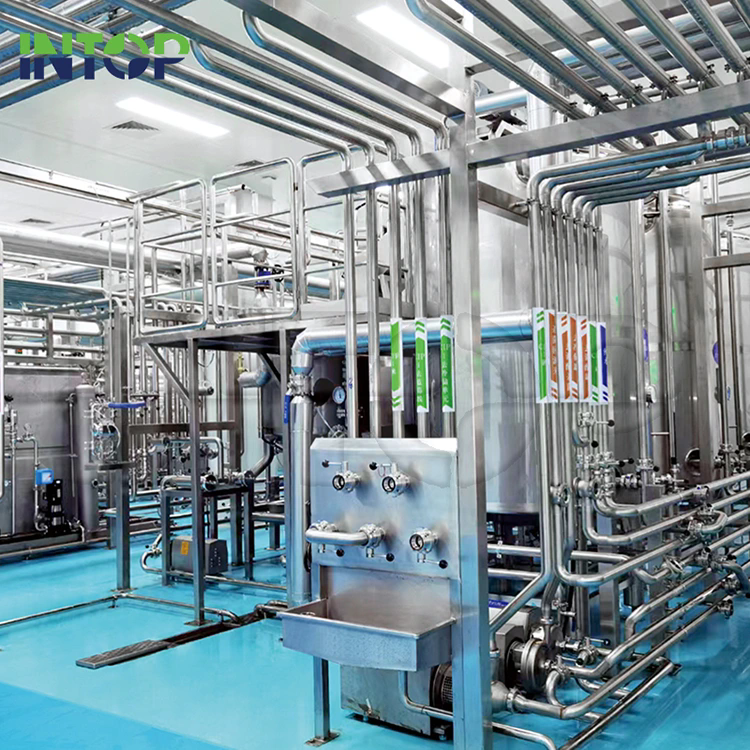
If you're buying a juice line for the first time or upgrading an existing one - the hardest part isn't the budget. It's knowing what actually happens inside the machine, and where things go wrong.Intop Machinery provides you with an easy-to-understand breakdown of the entire production process—from raw fruit to the final bottled product.
The Six Stages of Juice Processing
Sorting and washing comes first, and most people underestimate it. Dirty or overripe fruit at the inlet creates quality problems that no amount of downstream processing can fix. Fruit passes along a conveyor for manual or optical sorting, then through a washer — brush rollers for citrus, bubble wash for soft fruits.
Crushing and extraction is where you actually get the juice out. Hard fruits like apple and pear go through a crusher before pressing. Citrus gets a dedicated extractor that separates juice from peel oils. For most fruits, a screw press or belt press is used — the choice depends on your target yield and how much pulp you want in the final product. Some processors add pectinase enzymes here to break down cell walls and push yield up by 5–10%.
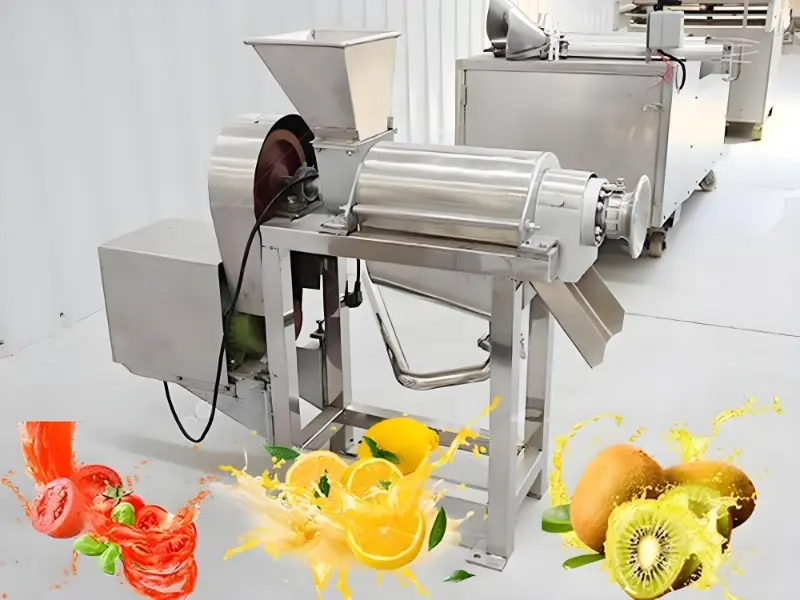
Filtration separates liquid from fiber. A vibrating screen handles the bulk of it. Whether you stop there or go further — centrifuge, ultrafiltration — depends on whether your product is pulpy, cloudy, or clear. Apple juice and white grape juice typically need much finer filtration than orange or mango.
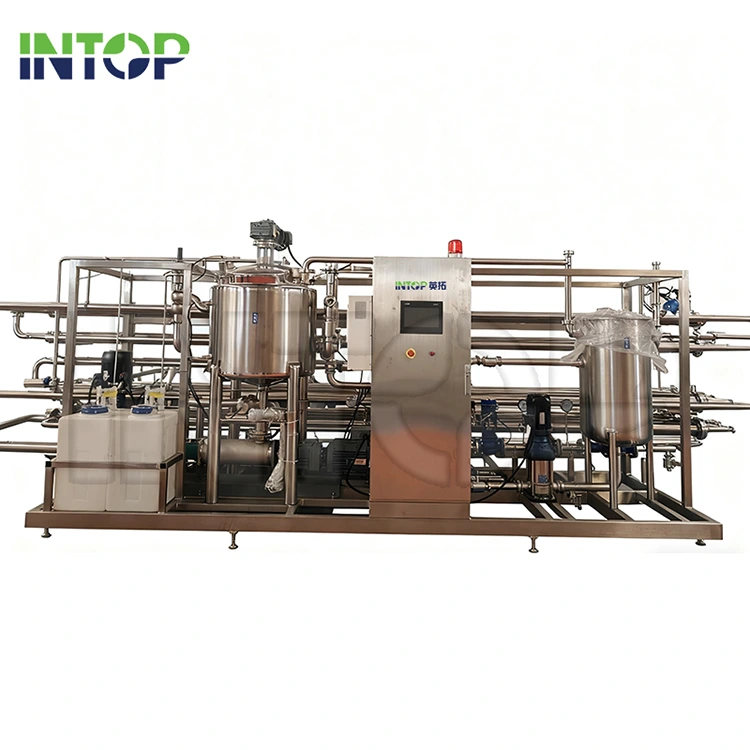
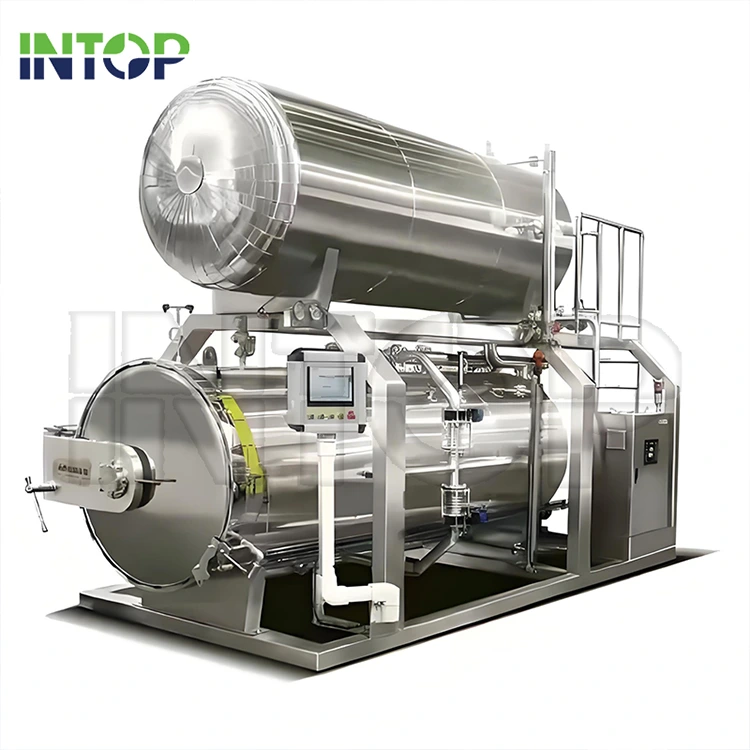
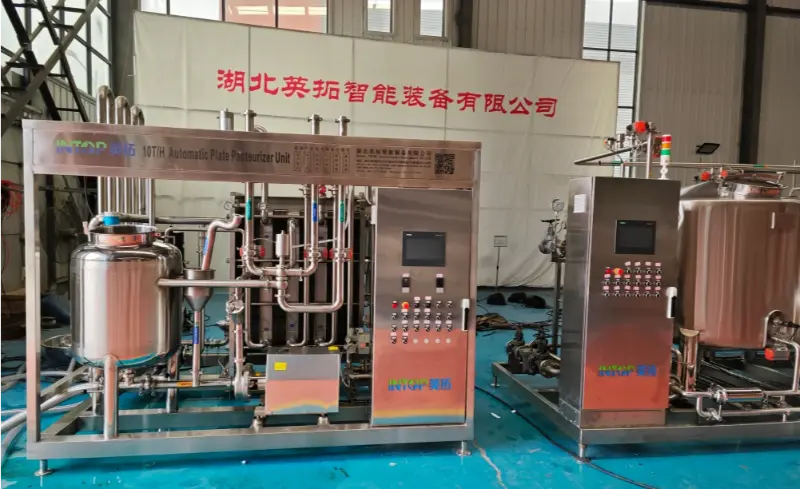
Pasteurization is non-negotiable. Most lines use HTST: 95°C for 15–30 seconds through a tubular or plate heat exchanger. If you're going aseptic — Tetra Pak, bag-in-box, long shelf life without refrigeration — you'll need UHT instead: 120–135°C for a few seconds. The difference in shelf life between the two is roughly 30 days versus 12 months.
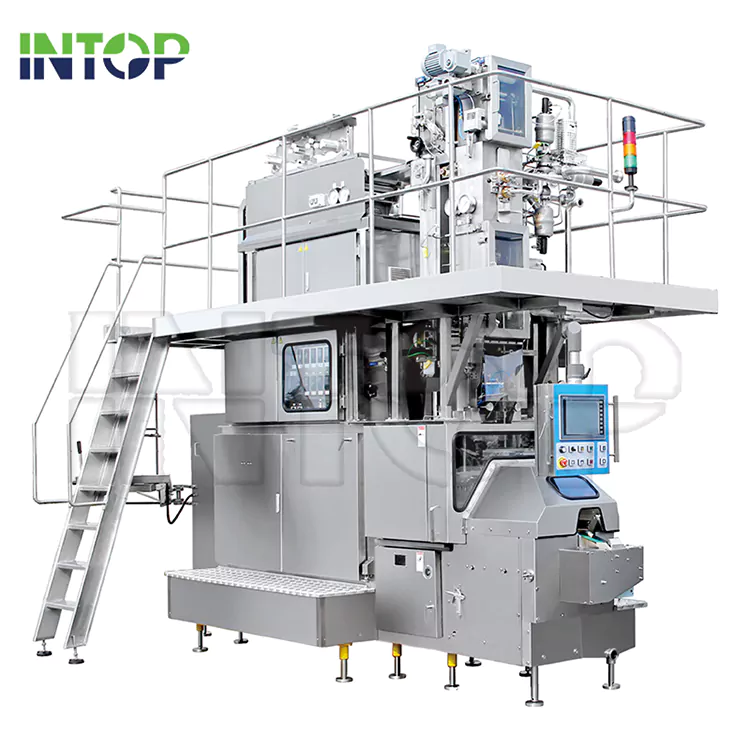
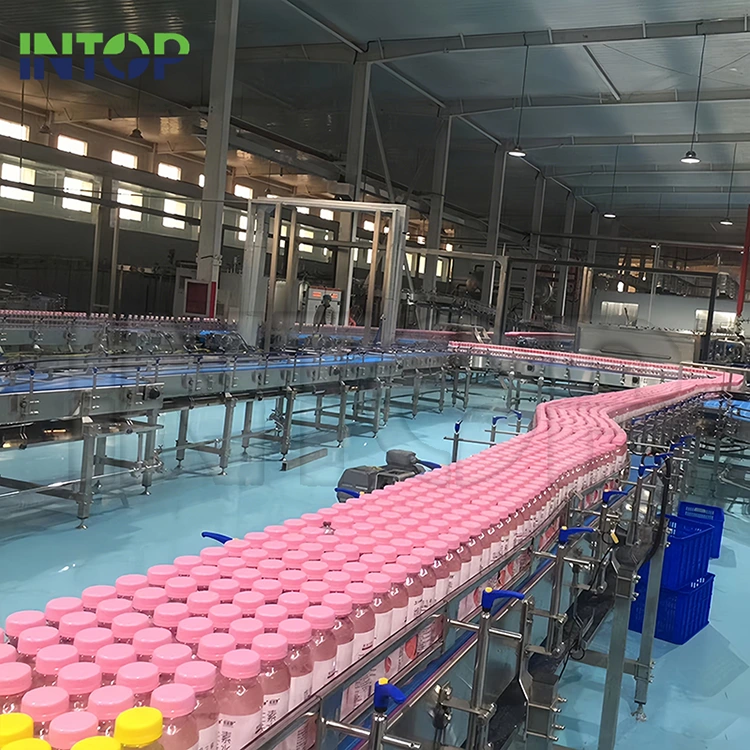
Filling is where contamination risk is highest if the line isn't designed properly. Hot-fill (85–92°C directly into the bottle) works well for PET and glass. Aseptic filling is more complex - product and packaging are sterilized separately, then combined in a sterile environment. It costs more upfront but opens up ambient distribution channels.
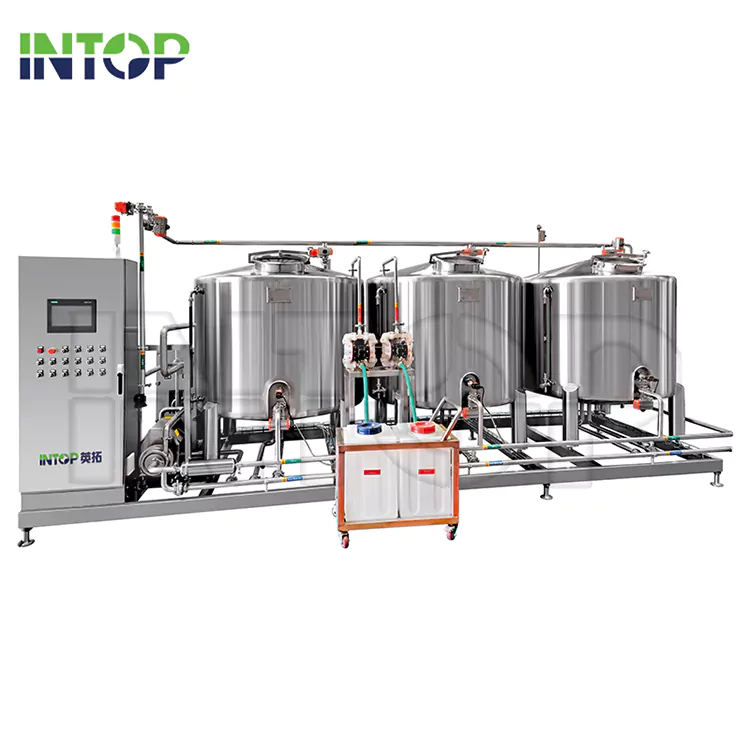
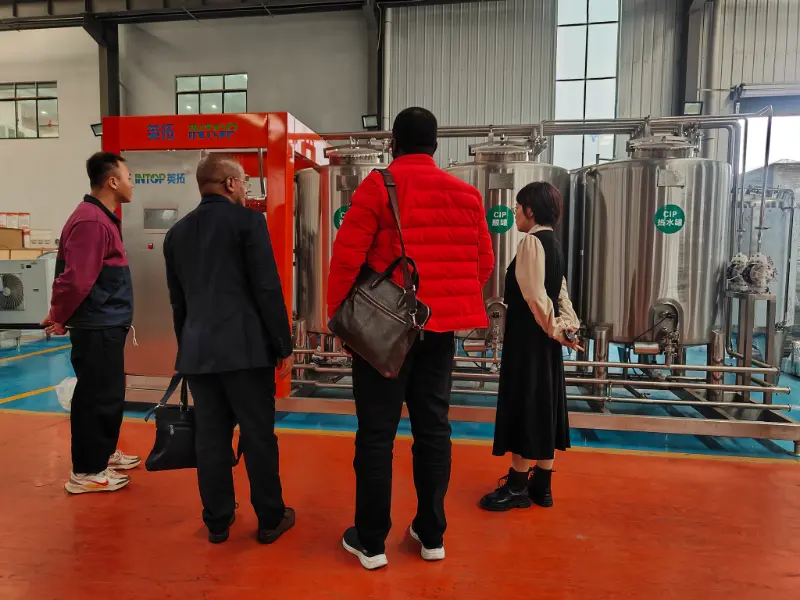
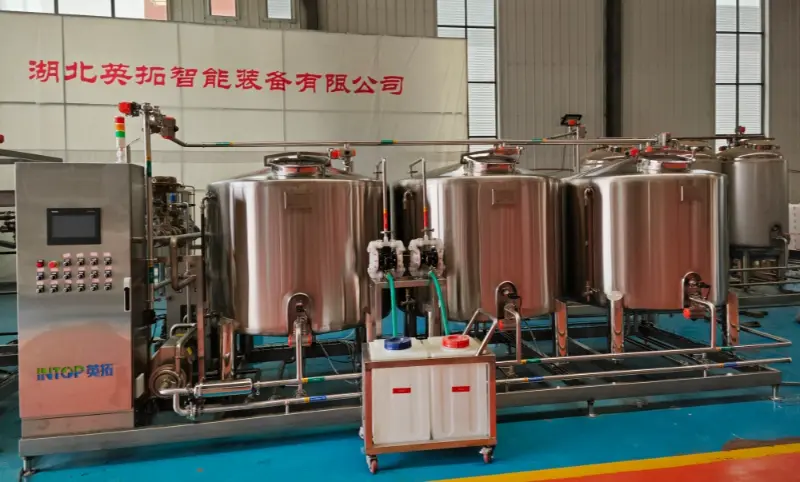
CIP — Clean-In-Place runs automatically after production. Cleaning solution circulates through the entire pipeline without disassembly. It's not exciting, but a well-designed CIP system is what keeps microbial counts down across shifts and seasons.
What Intop Offers
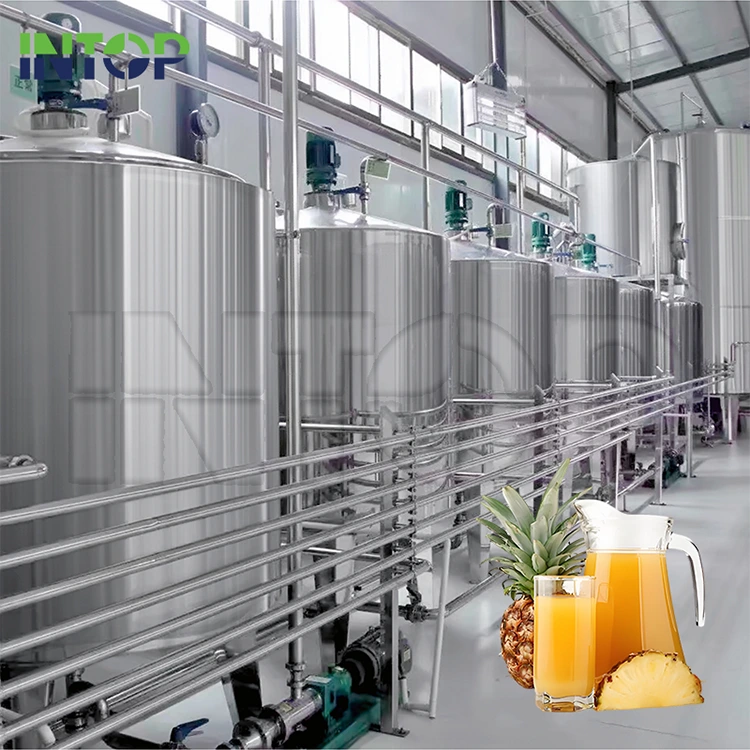
Intop builds juice lines for oranges, apples, mangoes, pineapples, passion fruit, tomatoes, and mixed blends - from 500 L/h pilot-scale systems to 20,000+ L/h industrial lines. The same line can produce NFC juice, concentrate, or clarified juice by adjusting which modules are in use.
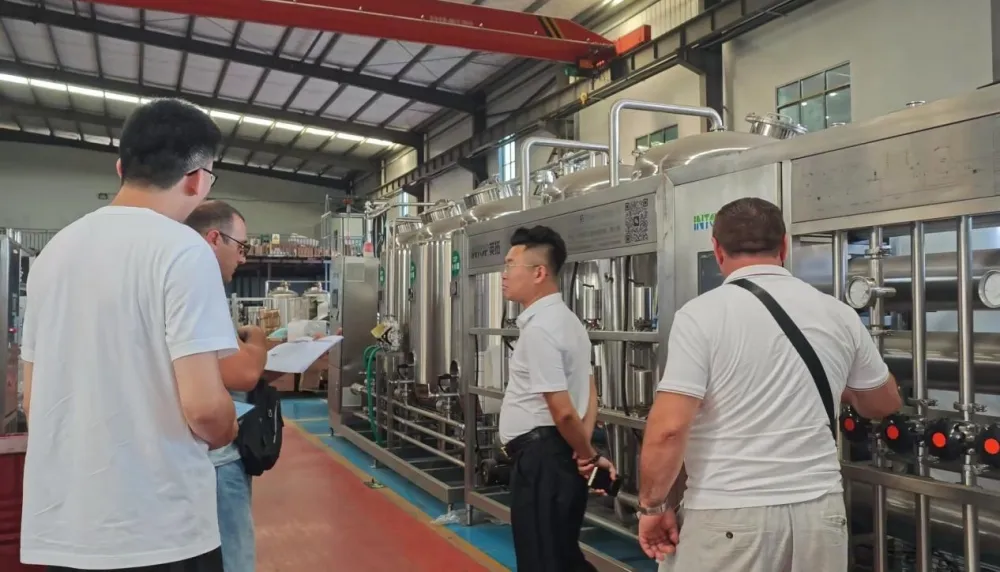
All product-contact surfaces are 304/316L stainless steel. Lines are CE and ISO compliant. Installation, commissioning, and operator training are included.
Got a specific fruit in mind, or a target output volume? Reach out directly and we'll put together a line configuration that fits.
Related News
- What Makes a Strawberry Juice Production Line Efficient, Safe, and Ready for Commercial Scale?
- Bottled Water Production Line: 10 Factors Before Investment
- How to Build a Juice Production Line That Handles Multiple Fruit Types
- What It Takes to Scale an Energy Drink Production Line for Global Demand
- How Does a Water Treatment System Work in a Beverage Production Line?
- How to Choose a CIP System for Multi-Product Beverage Production Lines
Leave me a message