English
- English
- Afrikaans
- беларускі
- Hrvatski
- lugha ya Kiswahili
- ქართული
- Кыргыз тили
- Монгол хэл
- IsiXhosa
- Somali
- O'zbek
- Hawaiian
- Հայերեն
- Español
- Português
- русский
- Français
- 日本語
- Deutsch
- tiếng Việt
- Italiano
- Nederlands
- ภาษาไทย
- Polski
- 한국어
- Svenska
- magyar
- Malay
- বাংলা ভাষার
- Dansk
- Suomi
- हिन्दी
- Pilipino
- Türkçe
- Gaeilge
- العربية
- Indonesia
- تمل
- ελληνικά
- український
- فارسی
- български
- ລາວ
- Latine
- Қазақша
- Azərbaycan
- Македонски
- Lietuvos
- Română
- Srpski језик

Why Sterilization Systems Fail in Beverage and Dairy Production?
Article Abstract
If you’ve ever hit a painful “everything looked fine… until it didn’t” moment—unexpected spoilage, swelling packs, off-flavors, a failed micro test, or a recall scare—you already know the truth: sterilization isn’t a single step, it’s a system. The most common failures aren’t caused by “insufficient heat” in isolation. They come from mismatched process selection, unstable flow, incorrect holding, sensor drift, incomplete CIP, operator workarounds, or packaging/handling gaps that quietly reintroduce risk.
This guide breaks down the real-world pain points behind Sterilization Systems, explains what “good” looks like in validation and daily operation, and gives you practical checklists to choose (and run) a sterilization line that protects shelf life without sacrificing taste, nutrients, uptime, or energy.
Table of Contents
- Outline
- The pain points that drive sterilization complaints
- Choosing the right sterilization approach
- System design factors that separate “passes audit” from “passes reality”
- Validation and documentation for confidence and compliance
- Operations checklist for stable day-to-day performance
- Working with an equipment partner
- FAQ
Outline
- Define the business problem: shelf life risk, quality drift, downtime, and audit pressure
- Map failures to root causes: process, equipment, measurement, cleaning, and handling
- Match process type to product + packaging: UHT vs pasteurization, continuous vs batch
- Design for control: holding, flow stability, heat exchange, and CIP integration
- Prove it works: validation, data logging, and change control
- Keep it working: maintenance, operator habits, and troubleshooting playbooks
The pain points that drive sterilization complaints
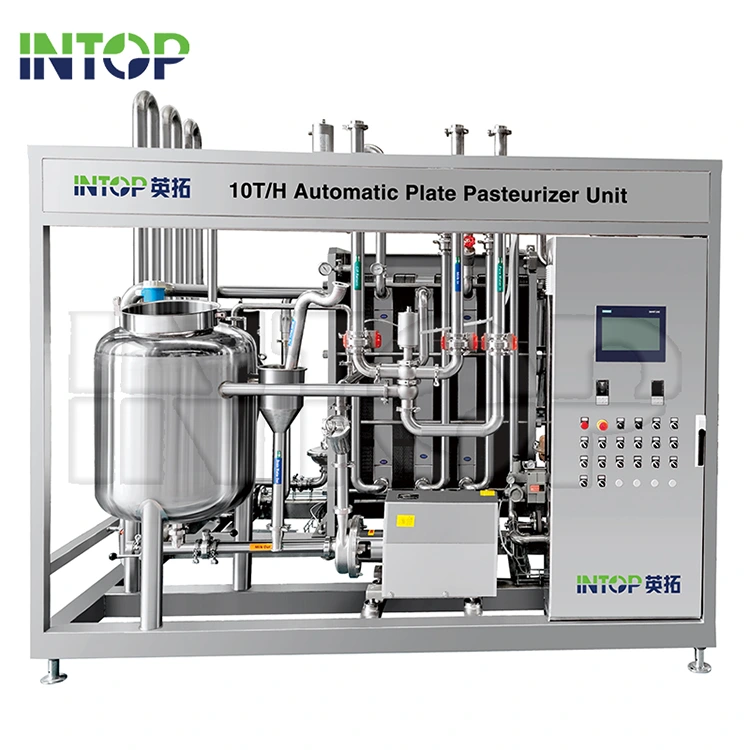
Most buyers don’t wake up wanting a new sterilizer. They wake up to problems. If any of these sound familiar, your sterilization step is probably doing more “damage control” than “process control.”
- Unstable shelf life: batches that pass micro testing but spoil early in distribution
- Quality losses: cooked taste, color shifts, viscosity changes, nutrient degradation
- Throughput bottlenecks: sterilization becomes the slowest unit in the line
- High utility costs: steam and cooling demand spikes, energy recovery is weak
- Audit anxiety: incomplete records, unclear validation logic, “tribal knowledge” SOPs
- Downtime: fouling, gasket leaks, valve failures, CIP that doesn’t actually clean
| Pain point | Likely root cause | Practical fix |
|---|---|---|
| Passes tests, fails in market | Cold spots, unstable flow, poor holding control, recontamination after heat | Verify holding time at worst-case flow, tighten valve logic, review post-sterile handling |
| Cooked flavor / color shift | Over-processing, slow heating/cooling, long residence time | Use faster heat transfer design, confirm setpoints, optimize heat recovery stages |
| Frequent fouling | Product burn-on, poor velocity profile, weak CIP coverage | Adjust flow velocity, improve CIP program, review gasket/plate/tube surface condition |
| Audit gaps | No clear validation, missing logs, manual overrides not documented | Implement data logging, calibration records, change control, and training sign-offs |
If you only remember one thing: “More heat” is rarely the best answer. Better control is.
Choosing the right sterilization approach
In beverage and dairy processing, two broad strategies cover most commercial needs: high-temperature short-time processing for extended shelf life, and lower-temperature pasteurization for quality-sensitive products with shorter distribution windows. The “right” choice depends on your product matrix (protein, sugar, fat, pulp), viscosity, package type, target shelf life, and downstream hygienic design.
| Approach | Best for | Common pitfalls | What to prioritize |
|---|---|---|---|
| UHT-style rapid processing | Longer shelf life targets, sensitive microbiological risk profiles | Over-processing taste, unstable holding time at varying flow | Fast heating/cooling, validated hold, reliable automation and logging |
| Pasteurization | Quality-first beverages, short-to-medium shelf life, packaged products | Inconsistent temperature distribution, weak container handling control | Uniform heating, steady conveyor/bath control, strong sanitation procedures |
| Batch retort processing | Certain packaged foods where batch control is acceptable | Cycle time, load configuration errors, documentation gaps | Repeatable loading, validated cycles, robust operator training |
Equipment formats often align with these choices—continuous tubular or plate-style units for liquid processing, tunnel spray or water bath units for packaged products, and retorts for batch needs. The point isn’t the nameplate; it’s the control strategy you can defend.
System design factors that separate “passes audit” from “passes reality”
Strong Sterilization Systems are built around repeatability. Here are the design and engineering factors that most directly impact microbial safety, product quality, and uptime.
Control of holding time and flow stability
- Confirm the worst-case residence time at minimum and maximum flow.
- Use instrumentation that detects drift early (not after failed product).
- Design bypass/divert logic so “unsafe” product cannot accidentally continue downstream.
Heat transfer efficiency without quality damage
- Fast heating + fast cooling is usually your quality best friend.
- Energy recovery stages reduce steam demand and stabilize temperatures.
- Right-sizing pumps and heat exchange surfaces prevents “slow cooking” effects.
CIP integration and hygienic design
Many sterilization failures begin as cleaning failures. A system that’s hard to clean is a system that will eventually hurt you.
- Ensure CIP coverage reaches valves, dead legs, gaskets, and heat transfer surfaces.
- Build a CIP “proof” mindset: measurable flow, time, temperature, and chemical concentration.
- Plan for the reality of your product: proteins, sugar syrups, pulpy juices, and viscous mixes foul differently.
Automation, data logging, and calibration
- Data logging should be default, not optional—especially for time/temperature critical steps.
- Calibration intervals must match risk: “We calibrated last year” is not a comfort statement.
- Operator interfaces should reduce workarounds, not encourage them.
Validation and documentation for confidence and compliance
In processing equipment, trust is earned by proof. Whether you sell locally or export globally, your team will sleep better if your sterilization step has a clear validation story.
A practical validation bundle
- Process definition: product, packaging, target shelf life, critical limits, and control strategy.
- Installation and commissioning checks: piping, valves, sensors, safety devices, utilities, and alarms.
- Operational qualification: confirm the system hits setpoints consistently across expected operating ranges.
- Performance qualification: worst-case runs that demonstrate microbial and quality outcomes are consistently achieved.
- Ongoing verification: calibration, trend review, and change control when product or throughput changes.
If your current “validation” is a single test result in a folder, you’re one uncomfortable customer complaint away from a very long week.
Operations checklist for stable day-to-day performance
A sterilizer that performs beautifully on Day 1 can quietly degrade by Day 90. The goal is to make stability boring.
Daily checks
- Review time/temperature trends for drift and repeated alarms.
- Confirm divert/bypass logic is functional and not bypassed in practice.
- Check seals, gaskets, and valve response for early leak signs.
Weekly checks
- Verify sensor accuracy with reference checks where feasible.
- Inspect fouling indicators: pressure drop changes, heat transfer performance loss.
- Review CIP results and adjust programs based on real residue patterns.
Change control triggers
- New product formulas (pH, sugar, protein, pulp) or new suppliers.
- Throughput increases or new package sizes that change residence time.
- Any “temporary” operator habit that becomes routine.
The best plants don’t rely on heroics. They rely on routines.
Working with an equipment partner
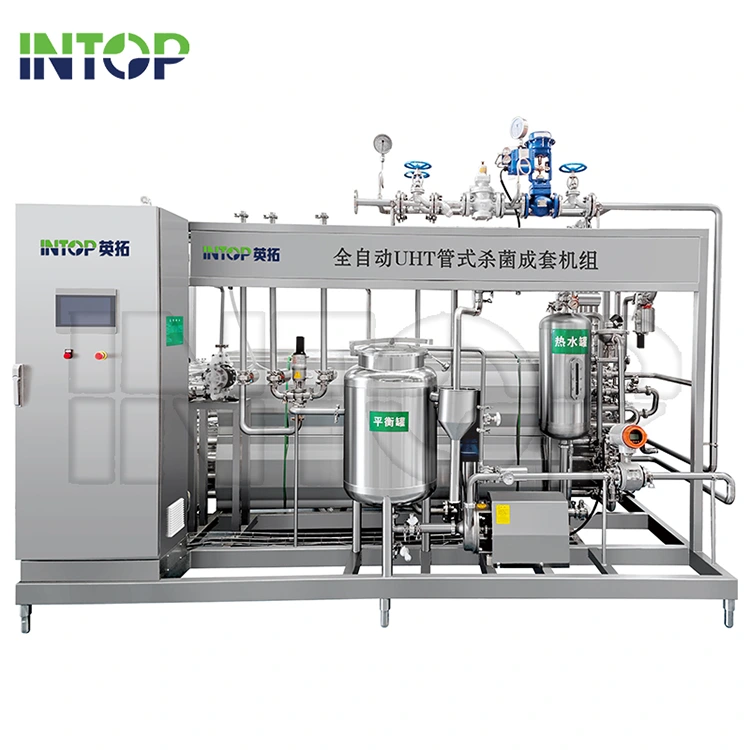
If you’re sourcing Sterilization Systems, your vendor choice matters as much as the equipment choice. You want a partner that helps you match product requirements to a defendable process—and supports the documentation, commissioning, and training that make outcomes repeatable.
Hubei Intop Machinery Co.,Ltd. positions its sterilization portfolio around common beverage and dairy processing needs—spanning liquid sterilizers (such as tubular and plate formats) as well as packaged-product solutions (such as tunnel spray and water bath-style pasteurization), plus supporting options like bottle tilting configurations and retort-type processing where appropriate.
Questions worth asking before you buy
- What product range (viscosity, particulates, protein content) is the system designed to handle?
- How is holding time verified across the full flow range?
- What is included in commissioning support and operator training?
- Which records and logs are available by default (alarms, setpoints, trends, calibration reminders)?
- How does the system integrate with CIP, upstream mixing, and downstream filling/packaging?
FAQ
What causes “random” spoilage even when the sterilizer hits the setpoint?
The usual culprits are flow instability (so real holding time varies), sensor drift, incomplete CIP (biofilm risk), and recontamination after heat treatment through valves, fittings, or downstream handling. The fix is to validate worst-case residence time, tighten hygienic design, and make verification routine.
How do I reduce cooked flavor while staying safe?
Prioritize faster heat transfer and quicker cooling, then re-check your setpoints against real product behavior. Many quality problems come from unnecessary residence time, not from the target kill step itself.
When should I consider a packaged-product pasteurizer instead of a liquid sterilizer?
If your product is already in containers during thermal processing (or must be processed that way due to formulation or line design), then tunnel spray or water bath-style pasteurization may fit better. The key requirement is uniform heating across every container, not just “average temperature.”
What documentation should I expect with a modern sterilization line?
At minimum: commissioning records, SOPs, critical control logic description, alarms and trend logging capability, calibration guidance, and a clear validation approach you can extend during product changes.
What’s the fastest way to shortlist Sterilization Systems for my line?
List your products (viscosity, particulates, pH), packaging format, target shelf life, and required throughput—then check which process type can deliver the result with the least quality damage and the strongest controllability. If a vendor can’t explain control and verification clearly, keep shopping.
Final takeaway
The best Sterilization Systems don’t just “heat product.” They protect your brand by making outcomes predictable—micro safety, sensory quality, and line efficiency—day after day, operator after operator, batch after batch.
If you’re planning a new line or troubleshooting an existing one, share your product type, package, and throughput targets—then contact us to discuss a sterilization configuration that fits your process and your market expectations.
Related News
- Tubular UHT Sterilizer Technology Advances Support the Growth of Aseptic Beverage Processing
- What Makes a Strawberry Juice Production Line Efficient, Safe, and Ready for Commercial Scale?
- Bottled Water Production Line: 10 Factors Before Investment
- How to Build a Juice Production Line That Handles Multiple Fruit Types
- What It Takes to Scale an Energy Drink Production Line for Global Demand
- How Does a Water Treatment System Work in a Beverage Production Line?
Leave me a message