English
- English
- Afrikaans
- беларускі
- Hrvatski
- lugha ya Kiswahili
- ქართული
- Кыргыз тили
- Монгол хэл
- IsiXhosa
- Somali
- O'zbek
- Hawaiian
- Հայերեն
- Español
- Português
- русский
- Français
- 日本語
- Deutsch
- tiếng Việt
- Italiano
- Nederlands
- ภาษาไทย
- Polski
- 한국어
- Svenska
- magyar
- Malay
- বাংলা ভাষার
- Dansk
- Suomi
- हिन्दी
- Pilipino
- Türkçe
- Gaeilge
- العربية
- Indonesia
- تمل
- ελληνικά
- український
- فارسی
- български
- ລາວ
- Latine
- Қазақша
- Azərbaycan
- Македонски
- Lietuvos
- Română
- Srpski језик

Which Filling Equipment Actually Solves Line’s Real Problems?
When I walk a plant floor, the most revealing clues sit in the scrap bins and the downtime logs. Over the years I have designed and audited lines alongside teams at INTOP, and I’ve learned that the label “Filling Equipment” covers very different realities depending on viscosity, packaging, hygiene class, and changeover habits. Instead of pitching hardware, I start with the problem the liquid and the container are trying to create for us, then match the tool to the fight.
Who is INTOP and how do we tailor filling systems without forcing your process to bend?
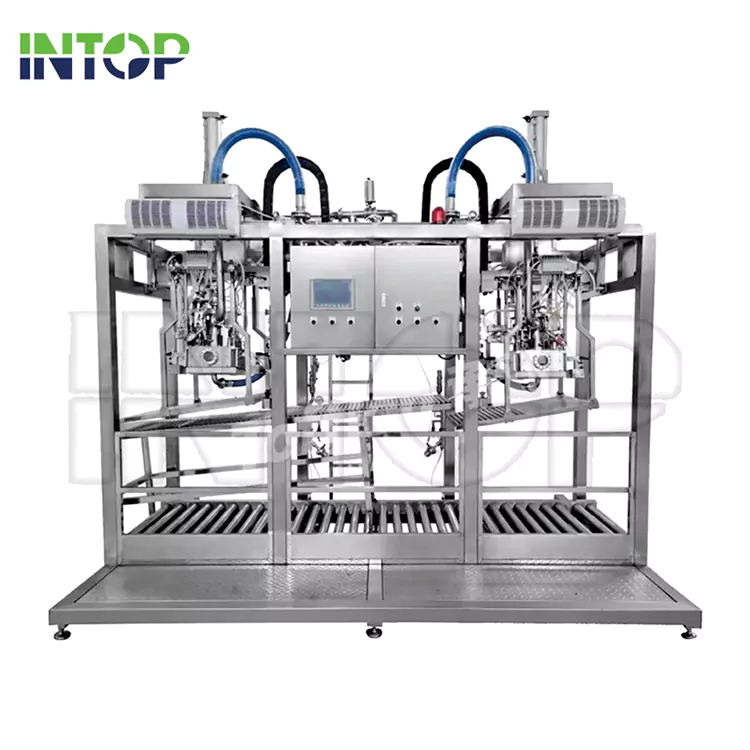
As an original equipment manufacturer, INTOP develops its own solutions from the ground up rather than importing under another brand. We provide customised solutions tailored to packaging specifications, cleanliness requirements and target production capacity, encompassing:
• Integrated three-in-one monoblock machines – combined bottle washing, filling and capping systems
• Precision glass bottle filling machines for premium beverages
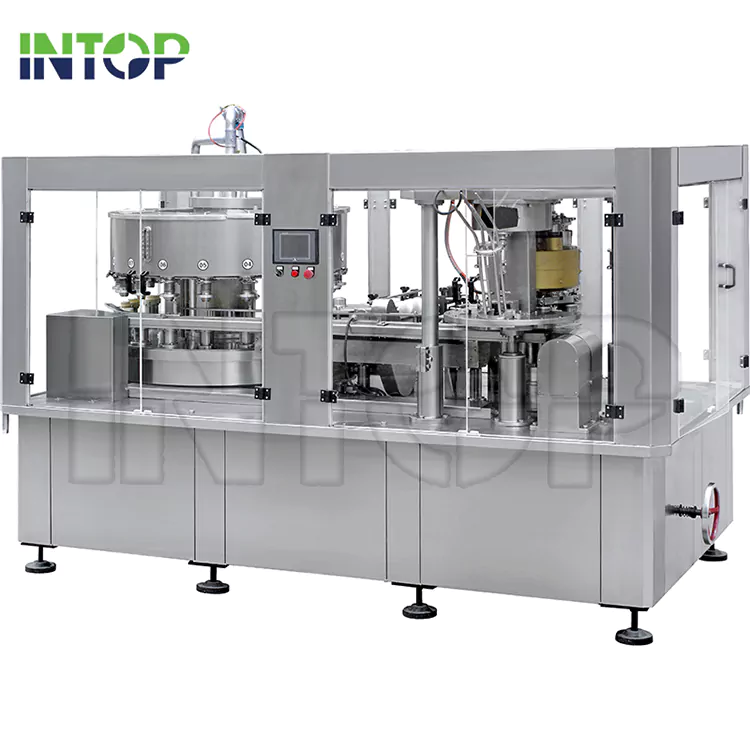
• High-capacity can filling machines
• Single-serve foil pouch filling and sealing systems
• Stepping cup systems for yoghurts and desserts
• Stand-up pouch filling machines with spouts
• Tri-pack solutions for chilled beverages
• In-bag aseptic filling systems for concentrates
• Brick-shaped aseptic packaging lines for ambient products.
We deliberately maintain such an extensive product catalogue to precisely match your product portfolio requirements, rather than forcing your products into a single ‘universal’ machine that proves unsuitable for any specific application.
What problems do operations teams raise before we even talk about nozzles?
- Foaming and oxygen pickup that kill yield and shelf life.
- Viscosity drift with temperature that confuses flowmeters and weights.
- Particulates that shear or clog conventional nozzles.
- Endless changeovers that burn an hour to save a minute in cycle time.
- Hygiene class gaps where “washdown” is not the same as hygienic or aseptic.
- Caps, films, and spouts that refuse to align at speed.
- Utilities that were never sized for real steam or air loads during SIP or blow-off.
Which filling principle fits my liquid and why does the wrong choice punish OEE?
I pick the metering method first, then the frame. Here’s how I explain the trade-offs when we put options on the table during a design review.
| Technology | Viscosity Window | Typical Accuracy | Changeover Effort | Cleanability | Best For | Watch Outs |
|---|---|---|---|---|---|---|
| Piston volumetric | Medium to very high, with particulates | ±0.5–1.0% by volume | Moderate, tooling sets by volume | CIP capable, SIP with proper seals | Sauces, creams, chunky fillings | Seal wear, heat expansion affects stroke |
| Mass flowmeter | Low to medium, stable temperature | ±0.2–0.5% by mass | Fast, recipe driven | Excellent, few dead legs | Oils, syrups, premium beverages | Costly meters, bubbles confuse signals |
| Net weight | Low to very high, wide density shifts | ±0.1–0.3% by mass | Fast, format parts minimal | Good, depends on scale isolation | Edible oil, detergent, chemical | Vibration sensitivity, tare management |
| Time-pressure | Low to medium, thin liquids | ±1–2% unless flow stabilized | Very fast, lowest cost | Good with manifold design | Water, juice bases, still drinks | Temp drift, back-pressure variation |
| Peristaltic | Low to medium, sterile paths | ±0.5–1.0% by volume | Quick, tube sets swap | Excellent single-use option | Pharma, flavors, high hygiene | Tubing wear, limited flow |
| Gravity/vacuum | Low, foam-prone beverages | ±0.5–1.0% by level | Moderate | Good with SIP upgrades | Glass bottles, level-control fills | Bottle variability affects level |
| Counter-pressure | Low, carbonated products | ±0.3–0.5% by level/mass | Moderate, more valves | Good, gas circuits to validate | CSD, beer, sparkling water | Gas control, CO2 losses |
How do container formats steer the machine architecture and the end effectors?
- Glass and PET bottles favor rotary carousels with neck handling and diving nozzles for bottom-up fills to calm foam. Level control makes packs look consistent on shelf.
- Cans prefer rotary starwheels and precise foam management before seaming. Counter-pressure paths keep carbonation where it belongs.
- Cups and trays thrive on indexed conveyors, servo pistons, film unwinders, nitrogen flushing, and post-fill tunnel pasteurization when needed.
- Doypack spouted pouches need cap handling that respects living hinge geometry and torque repeatability, plus clean fill nozzles that seat in the spout without shaving plastic.
- Gable-top cartons depend on gentle mandrel handling and tight temperature control near the top seal to avoid wicking defects.
- Aseptic brick packs require validated hydrogen peroxide or equivalent sterilization, sterile air management, and enclosure pressurization that survives door openings.
- Bag-in-drum focuses on long hold-times, aseptic connector compatibility, and weight-based accuracy for high-value concentrates.
- Foil-film seal packs live or die by web tension, forming depth, and peel strength curves that match your consumer’s hand force.
Why do three-in-one monoblocks earn their floor space when changeovers are frequent?
A single frame means fewer conveyors to re-sync after every SKU swap. I specify tool-less starwheels, automatic recipe change for fill heights, and smart capsper heads that read torque live. That cuts changeover time from an hour with wrenches to minutes with a checklist. On slower, highly varied lines, I’ll split the rinse and cap stations into modules so maintenance can isolate faults without freezing the filler.
How do I protect hygiene when the product will punish me for any lapse?
- Hygienic design with sloped frames, open-leg geometry, and welded manifolds avoids puddles and dead legs.
- CIP and SIP sequences are written with ramp-rate limits and flow velocities to actually scour the longest branches, not just pass a water rinse.
- Aseptic zones use positive pressure, monitored differentials, and validated kill steps on parts that can’t be steamed.
- Materials and seals are chosen for the chemistry and the temperature your sanitation team actually runs, not the brochure’s best case.
How do I keep oxygen out and foaming down without turning speed into the villain?
- Bottom-up fills with programmable nozzle lift profiles are my default for foam-prone SKUs.
- Pre-evacuation or inert gas blankets protect aroma and shelf life in premium beverages and oils.
- Anti-foam valves, laminar inlets, and back-pressure control keep the mass flowmeters honest.
- Warm-fill strategies use heat to lower viscosity where safe, then cap quickly to limit vapor loss.
What does a realistic capacity plan look like when I account for learning curves and product mix?
I always map three capacities instead of one: acceptance, steady-state, and peak promotional demand. Then I translate those to filler heads, pitch, and index time. Two real-world sketches help ground the math.
- Premium glass line with a 30-valve level filler, 30-head capper, and dry rinser typically targets 10,000–14,000 bottles per hour depending on bottle height and foam behavior.
- Cup dessert line with six lanes, servo pistons, twin film reels, and inline checkweighers runs 9,000–12,000 cups per hour with ±0.5 g target accuracy and under 2% film waste.
- Bag-in-drum aseptic with net-weight dosing hits 60–120 drums per hour while saving syrup by measuring mass, not volume, as temperatures wander.
Which RFQ details make vendors precise and which omissions cost you real money later?
- Define min and max viscosities at operating temperatures, not room temperature.
- List particulates by size, shape, and fragility instead of saying “with pulp.”
- Specify hygiene class, target pathogens of concern, and the existing CIP chemistry and temperatures.
- Share changeover frequency by SKU and total weekly SKUs so we right-size quick-change parts.
- Give closure specs with torque curves and liner material, not just “38 mm cap.”
- Note utilities you actually have and those you’re willing to upgrade so heat and air balances are honest.
How do I compare options quickly without sitting through five webinars?
This snapshot helps me shortlist with teams before deep-diving lifecycle cost.
| Package Type | Typical Fill Range | Line Speed Band | Hygiene Class | Preferred Metering | Typical Add-ons |
|---|---|---|---|---|---|
| Glass bottle | 200–1000 ml | 8,000–18,000 bph | Hygienic to aseptic optional | Gravity, mass, counter-pressure | Diving nozzles, inert gas, vision level |
| Aluminum can | 180–500 ml | 12,000–36,000 cph | Hygienic | Counter-pressure | Foam control, seam inspection |
| Cup | 50–250 g | 6,000–15,000 cph | Hygienic to aseptic | Piston, mass, time-pressure | Film sealers, date code, MAP |
| Doypack pouch | 90–1000 ml | 2,000–9,000 pph | Hygienic | Mass, piston | Spout capper, leak test |
| Gable-top carton | 500–2000 ml | 6,000–12,000 cph | Hygienic | Level, mass | Carton sterilization, chill hold |
| Aseptic brick | 125–1000 ml | 6,000–24,000 pph | Aseptic | Mass, level with sterilized circuits | Peroxide or equivalent sterilant, sterile air |
| Bag-in-drum | 20–220 L | 60–120 dph | Aseptic | Net weight | Aseptic connectors, recirculation |
What does lifecycle support look like when uptime is tied to small, boring habits?
- Remote diagnostics and smart alarms let my team fix a valve offset before it becomes a recall.
- Spare kits grouped by maintenance windows keep stores lean without gambling on long lead seals.
- Operator training focuses on first-10-minutes checks that prevent snowball failures mid-shift.
Why do teams pick INTOP when they are tired of compromises that only look good in brochures?
INTOP manufactures the frames, carousels, and dosing systems in-house, I can blend technologies across formats instead of accepting “close enough.” A monoblock for still beverages can share a control philosophy with a pouch line next door; an aseptic brick pack station can borrow validation logic from a bag-in-drum skid. That consistency lowers training time and smooths ramp-up after go-live.
How do we turn this into a plan you can defend in your next budget review?
- We sample your toughest SKUs and run bench trials to select the metering method.
- We map changeover realities and pick frames that minimize hands-on adjustments.
- We confirm hygiene class and utilities, then freeze the sanitation recipe with QA.
- We commit to acceptance, steady-state, and peak capacity numbers with the same math you’ll use later.
- We phase the project so packaging and process upgrades land in a sequence your plant can absorb.
Would you like a straight answer on feasibility, lead time, and ROI without a sales maze?
If you want a concrete proposal that respects your mix and your operators, contact us and ask for a line review based on your top three SKUs. Tell me your container formats, hygiene class, viscosities at operating temperatures, and weekly changeovers. I will respond with recommended Filling Equipment architectures, throughput bands, and a practical commissioning plan. Use the form on our site or just contact us to start a fast technical conversation that leads to a clear quote and a build schedule you can trust.
Related News
- Tubular UHT Sterilizer Technology Advances Support the Growth of Aseptic Beverage Processing
- What Makes a Strawberry Juice Production Line Efficient, Safe, and Ready for Commercial Scale?
- Bottled Water Production Line: 10 Factors Before Investment
- How to Build a Juice Production Line That Handles Multiple Fruit Types
- What It Takes to Scale an Energy Drink Production Line for Global Demand
- How Does a Water Treatment System Work in a Beverage Production Line?
Leave me a message