English
- English
- Afrikaans
- беларускі
- Hrvatski
- lugha ya Kiswahili
- ქართული
- Кыргыз тили
- Монгол хэл
- IsiXhosa
- Somali
- O'zbek
- Hawaiian
- Հայերեն
- Español
- Português
- русский
- Français
- 日本語
- Deutsch
- tiếng Việt
- Italiano
- Nederlands
- ภาษาไทย
- Polski
- 한국어
- Svenska
- magyar
- Malay
- বাংলা ভাষার
- Dansk
- Suomi
- हिन्दी
- Pilipino
- Türkçe
- Gaeilge
- العربية
- Indonesia
- تمل
- ελληνικά
- український
- فارسی
- български
- ລາວ
- Latine
- Қазақша
- Azərbaycan
- Македонски
- Lietuvos
- Română
- Srpski језик

How does a sorting and cleaning machine turn mixed materials into profit faster?
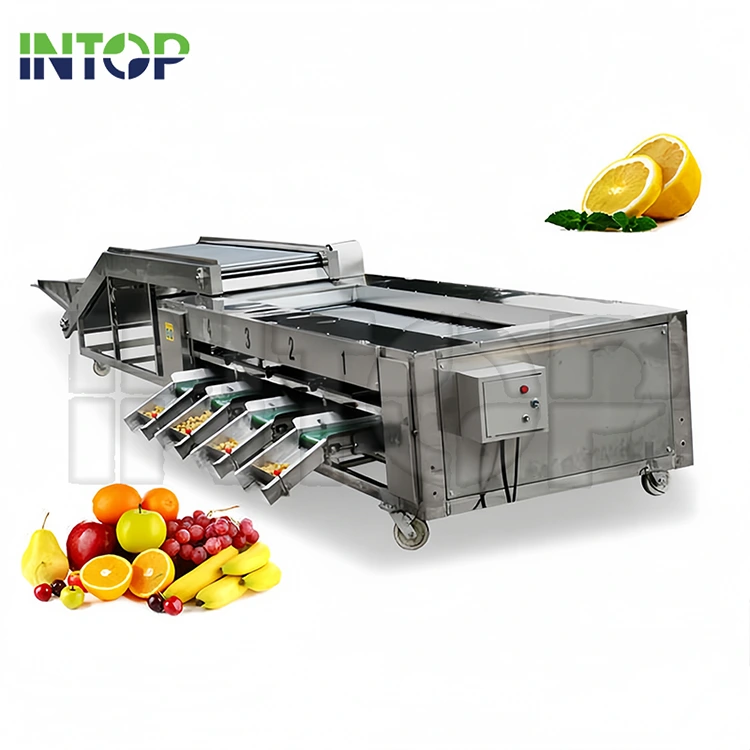
I manage production lines where every hour counts, and I learned that yield climbs when the upstream mess gets fixed first. After running trials across grains, seeds, nuts, plastics, and even small metal parts, I kept returning to Intop because the handling felt honest and the adjustments stayed put. When I say sorting and cleaning machine, I mean a compact system that removes dust, stones, off-grade pieces, and color defects before anything reaches processing. With a well-tuned sorting and cleaning machine, my operators spend less time rework-sorting, my quality team sees fewer complaints, and my finance sheet stops bleeding margin on avoidable waste.
What problems am I really trying to solve before I buy?
- Too many impurities that slow downstream equipment and cause jams
- Quality claims from black specks, cracked kernels, or yellowed parts
- Overtime on manual picking that still misses defects
- Inconsistent batches that break SPC rules and force write-offs
How does a sorting and cleaning machine actually work from intake to discharge?
- Pre-cleaning removes dust and light chaff with airflow and sieves
- Grading screens separate by size so fines stop contaminating good yield
- Density or aspiration stages lift out husk and hollow pieces that look fine but weigh less
- Optical sorting cameras read color and shape while ejectors push out defects in milliseconds
- Final polishing and metal removal prep the product for packaging or further processing
Which contaminants matter most and how do I quantify them?
- Foreign matter such as stones, glass, metal fragments
- Process defects like cracked kernels, undersized pellets, or misshaped parts
- Color deviation and mold spots that trigger rejection at incoming QC
- Moisture pockets that cause clumping and microbial risk
Why does sizing the system correctly change my ROI?
If throughput is too small, the line bottlenecks; too large, you overpay and underutilize. I match screen area, air volume, and ejector lanes to my true average flow plus a realistic peak. A right-sized sorting and cleaning machine runs steady at 70–85% load, which keeps accuracy high and energy per ton low.
What specification checklist helps me compare vendors quickly?
| Spec | What I verify | Impact on results | Typical range |
|---|---|---|---|
| Throughput | Continuous tons or kg per hour at target purity | Prevents bottlenecks and re-runs | 0.5–20 t/h by model |
| Screen module | Quick swap, anti-blinding design | Stable accuracy over long runs | 2–6 decks |
| Optical system | Resolution, frame rate, LED stability, ejector pitch | Defect removal down to sub-millimeter | Up to 0.1–0.3 mm detection |
| Aspiration | Adjustable air volume with repeatable scales | Less dust carryover and cleaner discharge | Multiple dampers |
| Hygiene and cleaning | Tool-less access, smooth contact surfaces | Faster changeovers and lower cross-contamination | <10 min section access |
| Energy | kWh per ton at steady state | Lower operating cost over equipment life | Benchmark across like-for-like |
Where do common mistakes hide and how do I avoid them?
- Skipping a dust extractor and then blaming the camera for haze
- Feeding surges from an undersized hopper that confuse eject timing
- Running mixed moisture lots without pre-conditioning the wet fraction
- Setting thresholds once and never auditing live defect images
Which industries get the fastest wins and what results can I expect?
In grains and seeds, I see cleaner product at first pass and fewer dockage penalties. In nuts and coffee, color consistency lifts price bands. In plastics regrind, tight size and metal removal protect extruders. Across these, a capable sorting and cleaning machine usually pays back through scrap reduction, higher throughput, and steadier premium grades.
How do I run daily operations so uptime stays high?
- Start with a five-minute dry clean and screen check at shift change
- Lock recipes by product and keep only two or three variants per SKU
- Audit reject chutes twice per shift to confirm real defects, not good product
- Trend kWh per ton and defect ppm so drift shows up before customers do
When I keep this rhythm, my sorting and cleaning machine holds spec through long campaigns and changeovers feel routine rather than risky.
What does the upgrade path look like when demand spikes?
I plan for modular lanes, extra screen frames, and a spare LED bar so expansion is a half-day job, not a shutdown. Because the footprint stays compact, adding a second sorting and cleaning machine parallel to the first often beats replacing everything with a single oversized unit.
Which proof points help me justify the investment to stakeholders?
- Side-by-side sample boards showing before and after defect counts
- SPC charts where Cp and Cpk improve after pre-cleaning
- Maintenance logs with fewer jam events and cleaner filters
- Customer complaints trending down over three consecutive months
Why does service and training matter as much as the hardware?
Even the best sorting and cleaning machine drifts without periodic calibration and operator refreshers. I schedule quarterly health checks, keep critical spares on site, and rotate staff through short training so settings improve instead of creeping.
How do I move from interest to a line trial with low risk?
I ship a representative sample, define pass-fail criteria, and agree on a small set of recipes beforehand. With that, the trial becomes a simple yes or no decision because the sorting and cleaning machine either hits the numbers or it does not.
What is my next step if I want predictable quality and better margins?
If your plant faces the same mix of impurities and rework that mine did, a modern sorting and cleaning machine is the most direct lever you can pull. I am happy to share trial templates, checklists, and startup plans so you can move quickly. If you are ready to benchmark your material on similar hardware, contact us now, send a small lot for testing, and let us map the settings that fit your line. Your best batch is the one you can repeat on demand, and this is how you get there.
Related News
- Tubular UHT Sterilizer Technology Advances Support the Growth of Aseptic Beverage Processing
- What Makes a Strawberry Juice Production Line Efficient, Safe, and Ready for Commercial Scale?
- Bottled Water Production Line: 10 Factors Before Investment
- How to Build a Juice Production Line That Handles Multiple Fruit Types
- What It Takes to Scale an Energy Drink Production Line for Global Demand
- How Does a Water Treatment System Work in a Beverage Production Line?
Leave me a message